 by
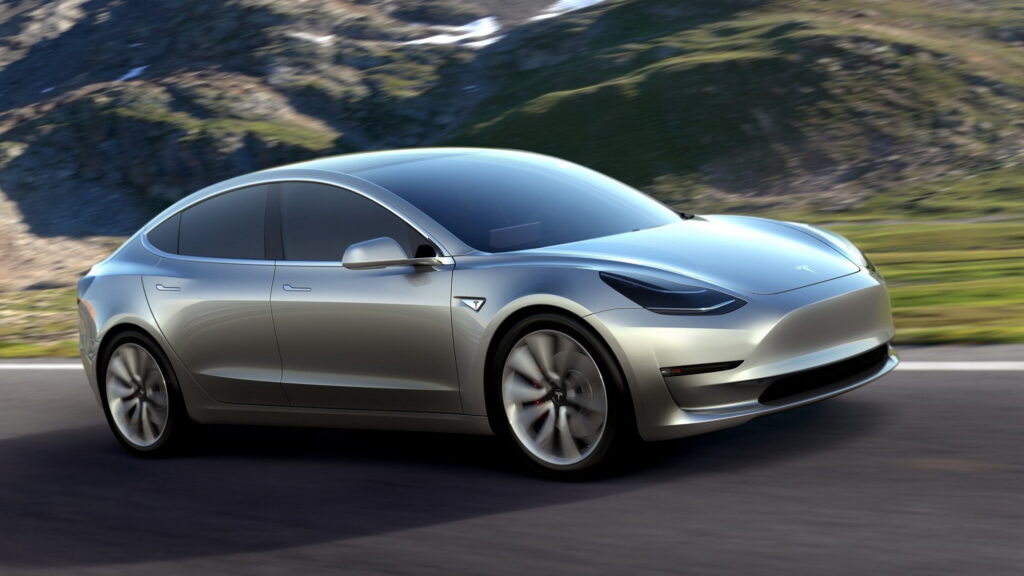
by Tesla Model 3 electric car covers 380,000 miles on original battery
Electric cars have many advantages over vehicles with internal combustion engines, but they all have an unpleasant truth under the body. Engines wear out over time, but the volume of the gas tank does not decrease. Electric cars inevitably suffer from battery degradation and reduced range. The only question is how critical this will become before the battery fails. A seven-year-old Tesla Model 3, still running on its original battery, provides some insight into this process.
Real battery degradation figures
After over 380,000 miles (610,000 km) of mileage, one Tesla Model 3, owned by the YouTube channel Drive Protected, continues to operate, though most vehicles (both gasoline and electric) would have long since failed. When the car was new, it offered 240 miles of range. Today, a full charge shows only 158 miles. This is a drop of 82 miles, or approximately 34.2 percent. This is significant degradation, placing the battery well below 70 percent of its original capacity.
This is not quite the death sentence one might expect. The car underwent a real highway test at a constant speed of 68 mph, showing 138.3 miles until full discharge. On paper, this is not impressive, but far from unusable condition. For short trips or urban use, it is still a perfectly functional vehicle.
Technical details and test results
The numbers confirm this. During the test, the car consumed 32.4 kWh. This is significantly less than the approximately 49 kWh it would have had when new. This aligns with the reduced range and confirms that the degradation is not theoretical.
Conclusions and outlook
Despite losing over a third of its capacity, no other part of the car appears fundamentally broken. No catastrophic failure, no sudden stops. It is simply a gradual reduction in range over time, approximately twice the mileage of most cars when they head to the scrapyard.
To some extent, this car makes arguments both for and against electric vehicles. Yes, battery degradation is real, measurable, and significant. Making batteries cheaper and easier to replace in the near future is key to the sustainability and longevity of electric cars. But it also shows that even after mileage that would render most vehicles inoperable, an electric car can continue to run, albeit with reduced range.
This case demonstrates that battery degradation is an inevitable process, but it does not necessarily make the car unusable. Even after significant capacity loss, an electric car can remain effective for daily trips, especially in urban conditions. However, for long-distance travel, such a car would already require more frequent charging stops, which can be inconvenient. This underscores the importance of developing battery replacement technologies and creating fast-charging infrastructure to extend the life cycle of electric cars and make them more sustainable in the long term.