 by
by The failed start of AI cameras in Greece
The idea of entrusting artificial intelligence with road safety control looks attractive on paper: fewer police officers on the roads, faster data processing, automatic fines. However, Greece tested this concept in practice, and the pilot phase has already revealed serious shortcomings. Despite promising initial signs, several AI cameras installed around Athens proved extremely ineffective in their main task: people checking the results confirmed only a small fraction of what the system recorded.
According to Greek media, the AI cameras generated about 13,000 fines in April and May, but human personnel were able to check only 5,500 of them. Of those checked, only 400 were deemed valid. The other 5,100 were rejected, divided into 3,800 speeding violations and 1,300 related to mobile phone use, non-compliance with seat belts, and similar offenses.
Why were thousands of fines rejected?
The two groups of rejected fines had different reasons. The 3,800 speeding fines were automatically canceled because they were based on average speed calculations — a method that currently lacks legislative support in Greece. Thus, this batch is not a software error.
The software could not distinguish a vape from text
Detection of phones and seat belts became a real problem for the technology, leading to the rejection of 1,300 AI-generated fines. Police found that the software regularly confused dark objects with smartphones and made mistakes due to drivers’ gestures, such as using a vape or shifting gears.
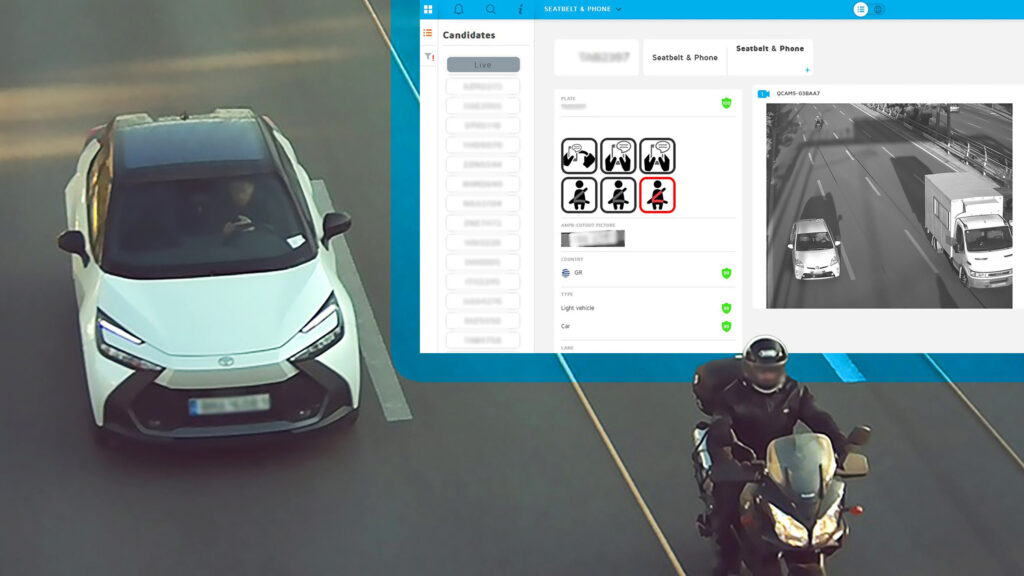
The AI cameras also had issues with lighting, misinterpreting shadows and dark clothing, according to the local newspaper Ta Nea. In several cases, the cameras recorded non-existent passengers in front seats for not wearing seat belts, sending automatic notifications about empty seats. In other cases, drivers were fined because their dark shirts blended with the seat belt, confusing the camera’s visual sensors.
Lack of context and data leak
Additionally, the cameras have no context. They record every car entering an emergency lane or bus lane without knowing the reason. A driver yielding to an ambulance is perceived the same as a violator, as is someone moving according to a traffic controller’s signals.
One caveat matters. These figures come from a data leak, not from official police sources, and Greek media have already made an error by misinterpreting the failure rate, turning a confusing story into a chaotic one.
The government tells a different story

The Ministry of Infrastructure and Transport publicly presents the program as a flawless success. According to an official announcement on the national TV channel ERT, the authorities finally confirmed 2,453 digital fines between the end of March and the end of May. Of these, dissatisfied drivers filed 420 formal objections, but the state accepted only 52, approximately 12%, mostly due to medical emergencies.
The government relies on this low acceptance rate to praise the system’s reliability. However, the problem is that human police officers still have to act as a secondary filter, manually clearing thousands of phantom violations before real fines reach drivers.
The real number of AI cameras
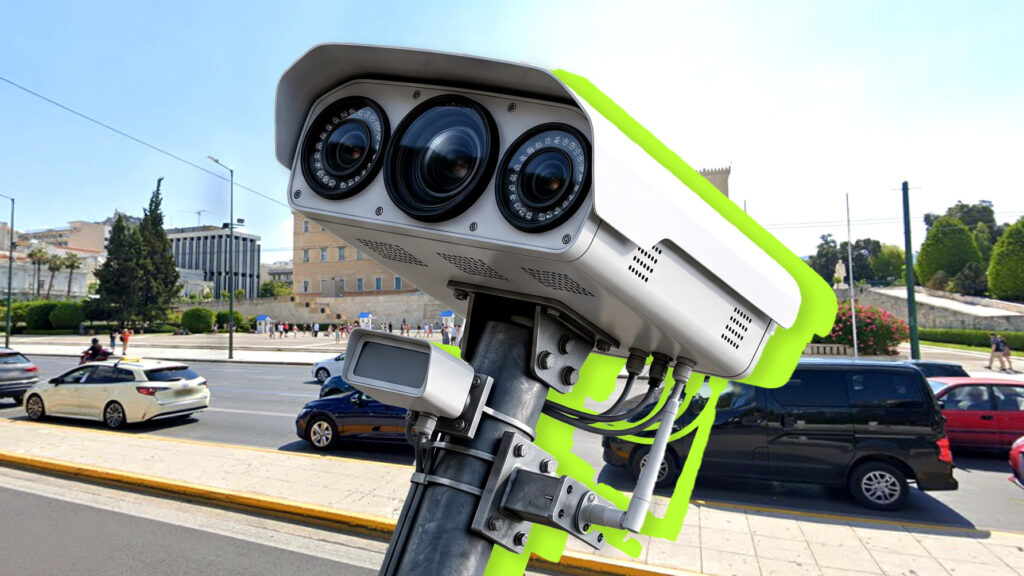
Speaking on the YouTube channel of Vassilis Saribalidis, Kimon Logothetis clarified that the Ministry of Infrastructure and Transport currently operates only 8 AI cameras in the region. These are the only ones that simultaneously monitor speed, red light, helmet, seat belt, and smartphone use.
It gets worse. The tender for the supply of 1,000 AI cameras on the roads of Attica reportedly failed after legal appeals from bidders, although it will likely be resumed later. Separate regional projects plan to install 388 standard, non-AI cameras by mid-July, which will be limited to capturing red light violations only.
In any case, it is obvious that both people and the algorithm must go through a steep learning curve for the investment to make sense. Hopefully, the process will improve over time, leaving law-abiding citizens alone.

Overall, this situation shows that the implementation of AI in traffic control requires not only technological refinements but also a clear legislative framework and thorough testing. So far, the system in Athens demonstrates more errors than efficiency, questioning the feasibility of scaling such projects without solving current problems. At the same time, the government’s position of “success” looks like an attempt to smooth over rough edges, as the real numbers indicate the opposite.