 by
by Retro Charm and Modern Technology
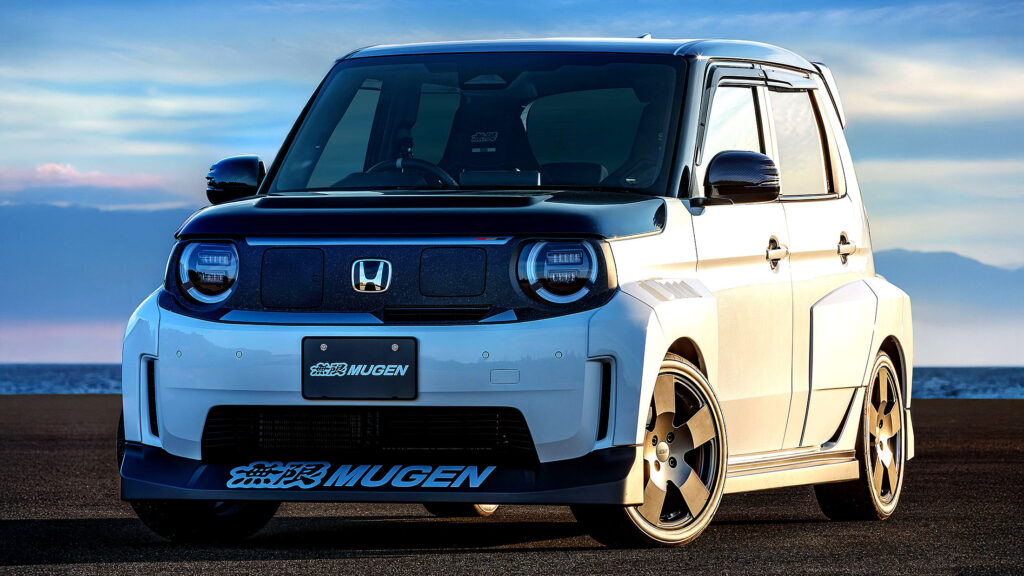
The new Honda Super-One responds to the growing demand for electric vehicles with retro design, actively borrowing the direct charm of the City Turbo II model from the 80s. Although the standard version already has a sporty look, Mugen went even further by introducing a more aggressive body kit, interior refinements, and a set of sport shock absorbers that emphasize this image.
Exterior with Motorsport Character
The Japanese tuner injects a dose of motorsport mood into the Super-One. A black front spoiler and a hood with ventilation holes appear at the front, but the real highlight is the sides of the car. Wide fenders with ventilation holes are installed here, mounted over the already widened arches.
These arches are complemented by carbon mirror covers, deep side skirts, and a set of 16-inch forged alloy wheels with a five-spoke design. At the rear, Mugen adds a massive roof spoiler and sharp rear bumper extensions.
Updated Interior for the Driver
Inside, the standard front seats are replaced by Recaro semi-bucket seats, which harmoniously complement the car’s sporty posture. Buyers can also get special floor and trunk mats, sill plates, and protective door trim with the Mugen logo, which can also be seen on the rim of the two-spoke steering wheel. Accessories also include hydrophobic mirrors and window wind deflectors.
Improvements Under the Hood and Chassis
As for the technical part, Mugen offers a product co-developed with Yamaha – Performance Dampers. According to the company, they improve handling and reduce vibrations. It is worth noting that the Super-One has a more aggressive chassis setup compared to the N-One e: kei car, including lowered suspension and a wider track.
Electric Powertrain Unchanged
Unfortunately, the zero-emission powertrain remains unchanged. The Super-One retains a single electric motor that delivers 94 hp (70 kW) in Boost mode. This is not a record figure, although Honda tries to add some theatrics using the Active Sound Control system, which reproduces simulated gear shifts and engine noise through speakers.
Mugen has not yet announced prices for these updates, as they are still under development. The launch in the Japanese market is scheduled for the end of May 2026.
Outside Japan, the Super-One is expected in the UK, Europe, Australia, New Zealand, and some Asian countries, opening up prospects for creating a monobox racing series. Such an environment would suit this car perfectly.
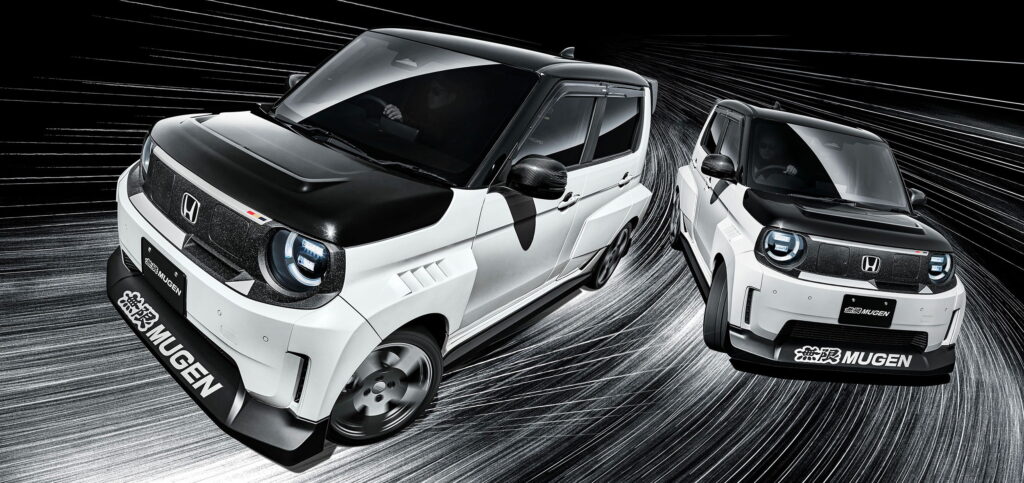
Mugen’s approach to tuning the Super-One is interesting because it focuses on the driver’s emotions and driving feel, not on dry power figures, which is a fairly common practice for electric vehicles. The emphasis on aerodynamics, weight, and handling may prove even more important for driving enjoyment in urban environments and on winding roads, where this compact Honda will likely feel most at home. This project also demonstrates how tuning ateliers are adapting to the electric vehicle era, finding new ways to improve cars when traditional engine power upgrades are losing relevance.