 by
by BMW uses artificial intelligence to improve crash tests
The world’s largest automakers are actively implementing artificial intelligence, and BMW is no exception. The company has partnered with an AI developer to improve its crash test simulations. Although this collaboration will not have a direct impact on car owners, the manufacturer notes that it will contribute to “creating value.”
Collaboration with Mistral AI
In the future, BMW will work together with Mistral AI to improve the quality, accuracy, and speed of performing complex engineering tasks. The automaker will combine its large arrays of engineering data with Mistral AI’s model training capabilities to create an industrial AI model.
Every week, BMW conducts thousands of virtual crash simulations and has already accumulated over a petabyte (1000 terabytes) of accident data. This archive allows engineers to analyze how specific car designs and materials behave during accidents, and how each of them affects the final outcome.
Large Industrial Models
The specific goal is the creation of so-called “Large Industrial Models” — artificial intelligence systems trained exclusively on engineering and simulation data obtained from crash tests and car development. The idea is that these models learn from BMW’s own processes, rather than from open internet data, which theoretically makes them useful where general AI models often prove ineffective.
“As industrial AI becomes a new frontier for AI, we are proud to partner with the BMW Group,” said Marjorie Janiewicz, Chief Revenue Officer of Mistral AI. “This collaboration shows how industry-specific AI models can help solve complex engineering tasks, such as crash test simulations.”
Reducing the need for workforce
In addition to aiding in crash test simulations, artificial intelligence accelerates the development of future BMW models, especially in code writing and software development. Tasks that used to take an entire day can now be completed in minutes. As BMW’s head of development Joachim Post reported last year, AI also allows the company to significantly reduce the need for personnel.
“Previously, we needed significantly more workforce,” he said. “Now we can use much greater efficiency potential. And AI helps us a lot with this, for example, in code writing. We get incredible speed in software development, and along with it, additional speed in the entire development process.”
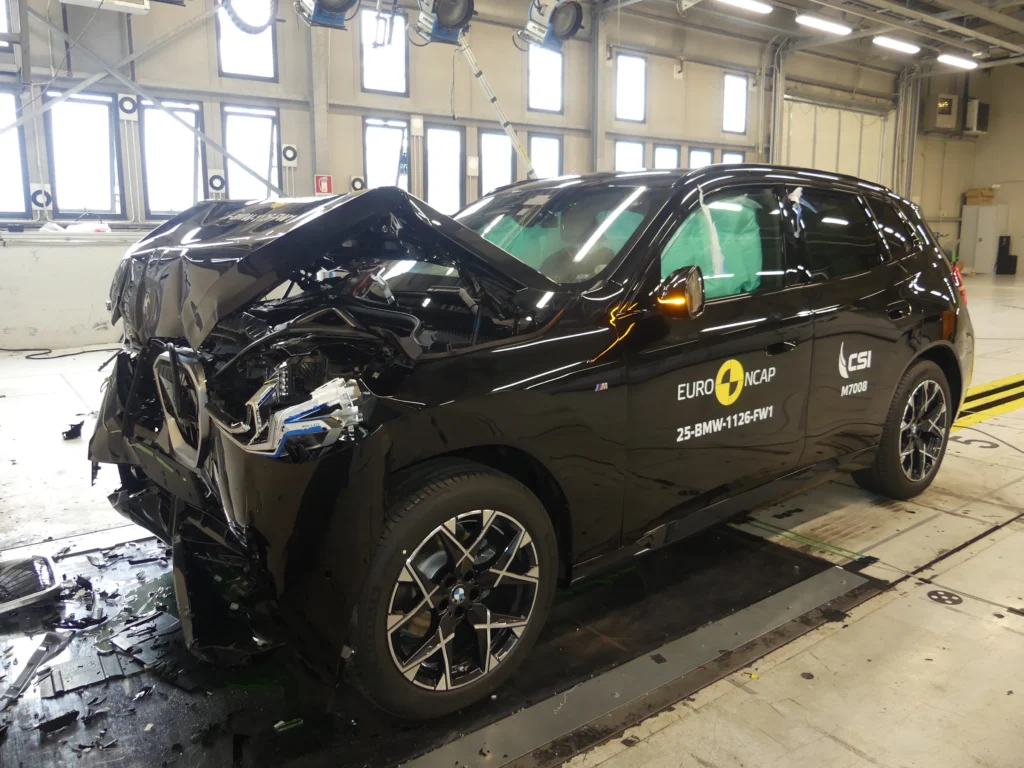
This move by BMW is part of a general trend in the automotive industry, where artificial intelligence is increasingly used not only to improve safety but also to optimize production processes. Focusing on proprietary, industry-specific data allows for the creation of more accurate and relevant models, which could lead to faster innovation and lower development costs. Although the direct impact on the consumer may not be obvious, such technologies in the long term can make cars safer and their creation process more efficient, potentially affecting the final cost of the product.