 by
by Gas prices have surged 46% in four months, hitting owners of traditional vehicles the hardest. Annual energy costs for electric vehicles have barely changed, while for gasoline cars the average increase was $706. Large SUVs, pickup trucks, and minivans suffered the most: some owners faced a jump in costs of over $1,600.
Fuel price surge: how driver costs have changed
Gas prices often go unnoticed when they are stable. But when they spike sharply, every fill-up turns into a minor financial crisis. Drivers of ‘thirsty’ pickup trucks and body-on-frame SUVs know this feeling well. New research shows that 2026 became just such a period, when fuel costs turned from a minor inconvenience into a serious budget item almost overnight.
iSeeCars study data
According to a new iSeeCars study, gas prices rose nearly 46% between January and April, climbing from $2.81 to $4.10 per gallon. The situation has only worsened since then. As of publication on May 24, the national average price is $4.52 for regular gasoline, $5.01 for mid-grade, $5.39 for premium, and $5.62 for diesel.
Even considering the shorter January-to-April period covered by the study, the math is grim: the average annual increase in fuel costs for traditional gasoline vehicles was $706. Electric vehicle drivers barely noticed the change: annual charging costs rose by only $11.
Fuel cost increase by drivetrain type: January vs. April 2026
| Drivetrain Type | Average Annual Mileage | Annual Fuel Cost January 2026 | Annual Fuel Cost April 2026 | Difference |
| ICE | 13,323 | $1,533 | $2,240 | $706 |
| Hybrid | 14,696 | $1,055 | $1,540 | $486 |
| PHEV | 11,660 | $1,385 | $1,676 | $291 |
| Electric Vehicle | 11,880 | $714 | $725 | $11 |
How cost changes affected different vehicle types
The data was obtained by analyzing over 2.1 million three-year-old used cars sold in 2025. Researchers studied average annual mileage and compared it with fuel costs in January and April to estimate how ownership costs changed in just four months.
The impact was unevenly distributed across different powertrain types. Internal combustion engine vehicles suffered the most: their annual fuel costs rose from $1,533 to $2,240. Hybrids were less affected, increasing by $486. Plug-in hybrids fell in the middle with a $291 increase. Electric vehicles barely changed, going from $714 to $725 per year, which is even more impressive considering the study did not limit itself to drivers who have the ability to charge at home.
Fuel cost increase for major gasoline vehicle segments: January vs. April 2026
| Segment | Average Annual Mileage | Annual Fuel Cost January 2026 | Annual Fuel Cost April 2026 | Difference |
| Minivans | 19,292 | $2,472 | $3,610 | $1,139 |
| Pickup Trucks | 14,369 | $2,154 | $3,146 | $992 |
| SUVs | 12,731 | $1,479 | $2,161 | $681 |
| Passenger Cars | 13,714 | $1,316 | $1,922 | $606 |
Which vehicles were affected the most
Here’s the thing. Efficiency was not the only factor. Mileage played a huge role. Minivans, surprisingly, took the biggest hit among all segments. Annual fuel costs rose by $1,139, reaching $3,610. Of course, this is largely because most minivans (except the VW ID.Buzz) are designed for high mileage. Pickup trucks, with their laughable fuel efficiency and brick-like drag coefficient, were not far behind with a $992 jump.
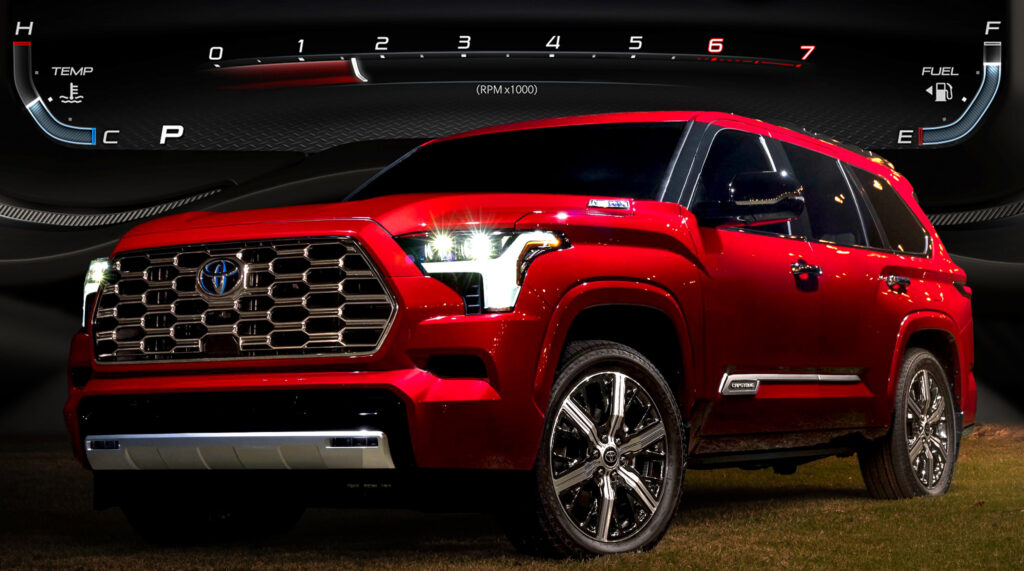
SUV owners suffered almost karmically: the Toyota Sequoia topped the list with an average increase of $1,623. The Chevrolet Suburban took second place with $1,542, and the Nissan Armada rounded out the top three with a $1,513 increase. Looking more broadly, this may explain why hybrids continue to gain popularity. They allow you to avoid range anxiety and charging issues that still concern some buyers, while significantly softening the blow from gas price spikes.
Top 10 vehicles with the largest increase in fuel costs
| Rank | Model | Average Annual Mileage | Annual Fuel Cost January 2026 | Annual Fuel Cost April 2026 | Difference |
| 1 | Toyota Sequoia | 17,856 | $3,523 | $5,145 | $1,623 |
| 2 | Chevrolet Suburban | 19,626 | $3,347 | $4,889 | $1,542 |
| 3 | Nissan Armada | 18,098 | $3,284 | $4,797 | $1,513 |
| 4 | GMC Yukon XL | 18,734 | $3,193 | $4,664 | $1,471 |
| 5 | Chevrolet Tahoe | 16,727 | $2,860 | $4,177 | $1,317 |
| 6 | Cadillac Escalade ESV | 16,387 | $2,847 | $4,159 | $1,312 |
| 7 | GMC Yukon | 16,592 | $2,831 | $4,135 | $1,304 |
| 8 | Jeep Wagoneer | 16,975 | $2,782 | $4,064 | $1,282 |
| 9 | GMC Sierra 1500 Limited | 17,069 | $2,772 | $4,050 | $1,277 |
| 10 | Chrysler Pacifica | 20,872 | $2,682 | $3,918 | $1,236 |
| Average for ICE | 13,323 | $1,533 | $2,240 | $706 | |
This data clearly demonstrates that rising gas prices affect different market segments unevenly. Owners of large, fuel-inefficient vehicles with high annual mileage found themselves in the most vulnerable position. This could accelerate the consumer shift towards more economical hybrid or fully electric models, especially as ownership cost becomes a key factor in car choice. At the same time, the resilience of electric vehicles to such price fluctuations makes them an increasingly attractive alternative, despite the higher initial purchase price and infrastructure challenges.