 by
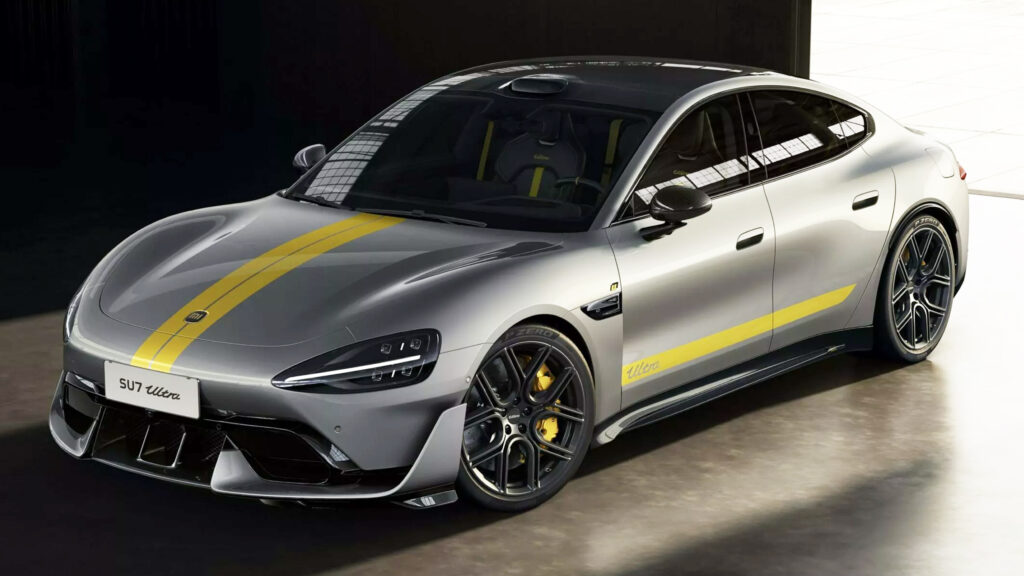
by After conquering its home market of China with several exciting EVs, Xiaomi will soon start selling its cars internationally. Things will kick off in Europe next year, including in Germany, with the signing of several memorandums of understanding with dealership groups to make it happen.
Read: Xiaomi’s New $38,400 SUV Runs 314 Electric Miles Before Burning A Drop Of Gas
Xiaomi already operates a large research and development center in Munich, Germany, and will work alongside groups including LUEG Mobility GmbH, a Mercedes-Benz dealer, and Emil Frey Germany, one of the nation’s largest automotive dealership groups. Working with experienced partners will allow Xiaomi to hit the ground running with dealers that have already established trust with customers across Germany and have extensive experience in new-car sales.
In addition, working with dealerships rather than selling vehicles directly to consumers will give prospective buyers the chance to touch and feel Xiaomi products in the flesh before handing over any of their hard-earned cash.
Xiaomi’s models in Europe will be more expensive than the ones it sells in China. The EU imposes hefty tariffs on EVs imported from China, significantly increasing their prices. Xiaomi had yet to launch its first EV, the SU7 sedan, when the European Commission launched its investigation into Chinese EVs in 2023, and as a result, the technology company didn’t participate in the probe. As noted by the South China Morning Post, this means it could be hit with the highest possible duty of 45.3 percent.
Xiaomi’s Skynomad
Since it started selling vehicles, Xiaomi has delivered more than 700,000 units in China, a remarkable achievement given how new it is to this ultra-competitive industry. However, in China, Xiaomi is a well-established consumer product brand, often viewed as the ‘Apple of China.’ This gave it a huge competitive advantage over other new-vehicle brands as it’s already a trusted name.
Although Xiaomi products are also available in several overseas markets, they remain a relatively small player in regions like Europe and won’t be able to rely on familiarity to win over customers. Instead, it will need to convince shoppers with great features and competitive pricing, which is a tall task indeed, especially in the hotly contested markets of the Old Continent.