 by
by CONS ›› Middling range, weight, screen-heavy cabin, depreciation risk
Porsche wasn’t the first automaker to sell an SUV that felt quick. It was, however, the first to prove that an SUV could be truly athletic on pavement. The original Cayenne was somewhat unloved by many in the automotive sphere, but it set a new bar for an SUV that could do more than hustle down a straight road with a loud exhaust and too much body roll. It could attack curves in a way no other similar vehicle could.
Now Porsche has a different, arguably tougher job. The 2027 Cayenne Electric arrives in a market already full of expensive electric SUVs, including the Lucid Gravity, Cadillac Vistiq, Volvo EX90, Mercedes EQS SUV, and BMW’s upcoming iX5. This time, being fast is not enough. The question is whether Porsche can make an EV SUV feel special enough to rewrite the rulebook again.
The Cayenne Turbo Electric certainly has the hardware to try. Its dual-motor system produces 1,139 hp and 1,106 lb-ft of torque with Launch Control engaged. That is four-figure power in a five-seat family SUV. The real question isn’t just whether or not the driving experience will be memorable. It’s whether it’ll be memorable enough and engaging enough to be a true sales success for the brand at a time when Americans are overlooking impressive EVs all over the market.
Quick Facts
| › Model: | 2027 Porsche Cayenne Turbo Electric |
| › Starting Price: | $165,350, including destination ($198,180 as tested) |
| › Dimensions: | 196.3 x 78.0 x 65.9 in (4,985 x 1,980 x 1,674 mm) |
| › Wheelbase: | 119.0 in (3,023 mm) |
| › Curb Weight: | 5,860 lbs (2,658 kg) |
| › Powertrain: | Dual electric motors / AWD / 113-kWh battery |
| › Output: | Up to 1,139 hp (850 kW) / 1,106 lb-ft (1,500 Nm) |
| › 0-62 mph | 2.4 seconds (0-100 km/h) |
| › Transmission: | Single speed |
| › Range: | Up to 298 miles |
| › Towing Capacity: | 7,716 lbs (3,500 kg) |
| › On Sale: | Now |
SWIPE
Styling Befitting A Cayenne
Credit: Stephen Rivers for Carscoops
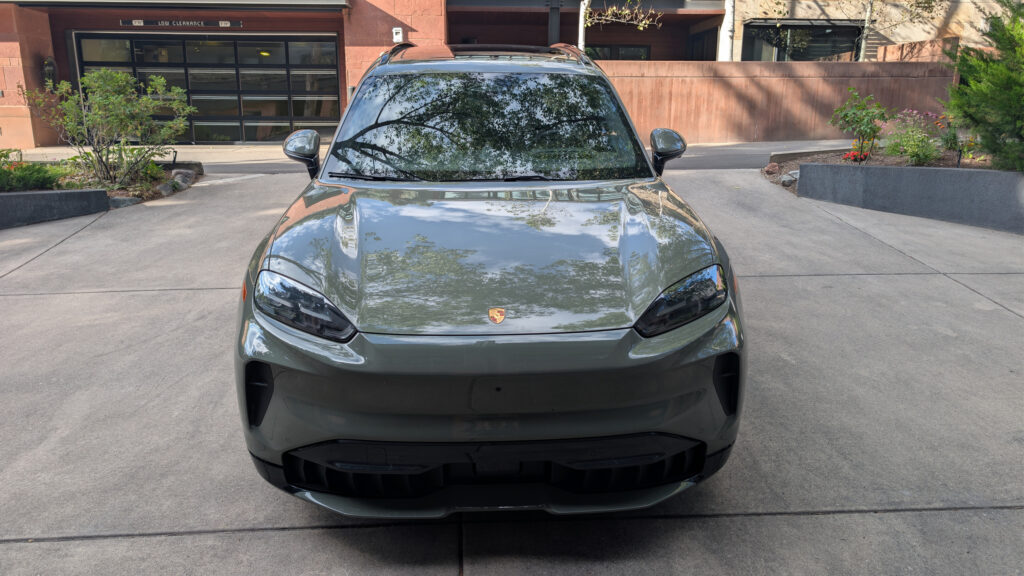
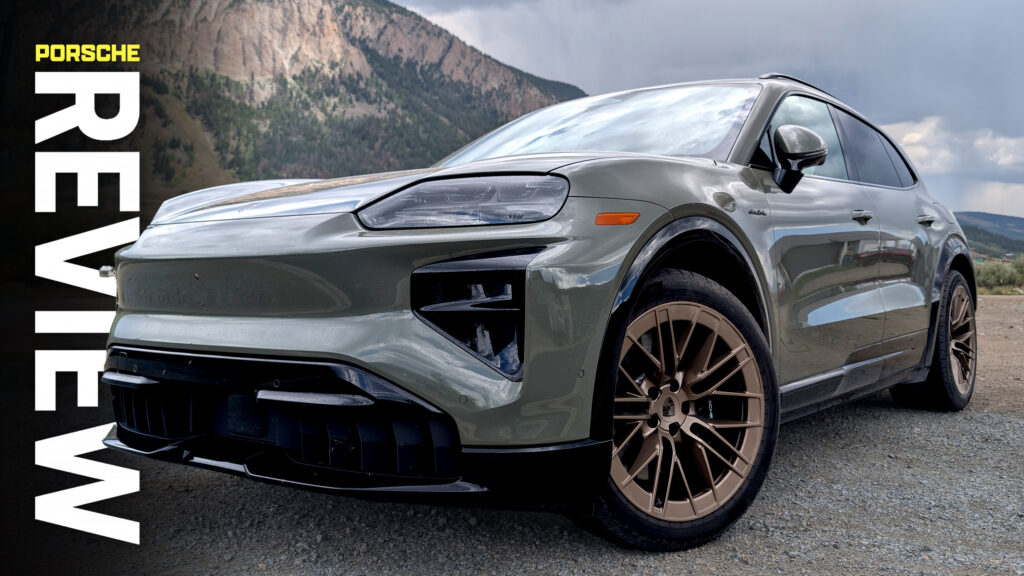
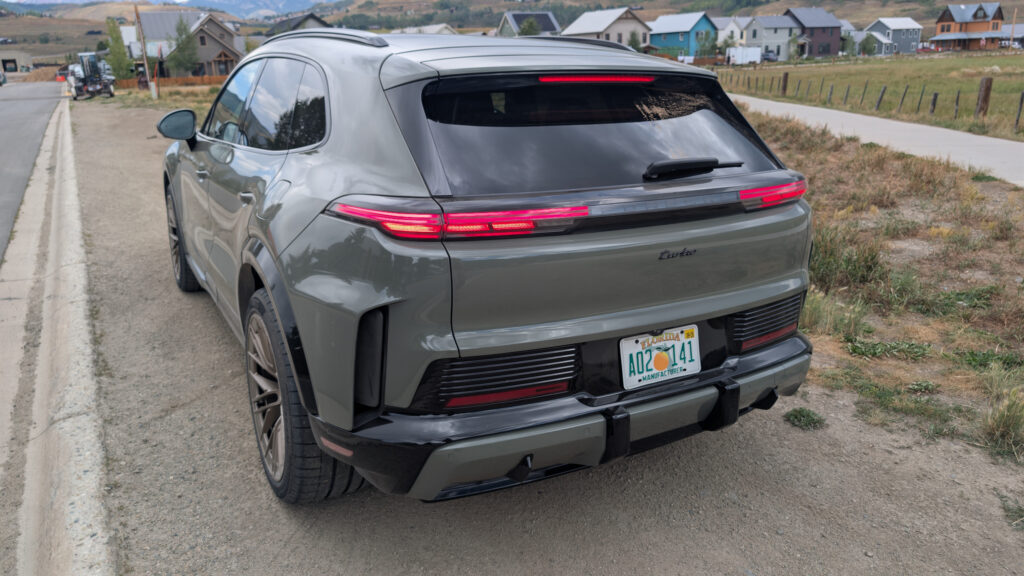
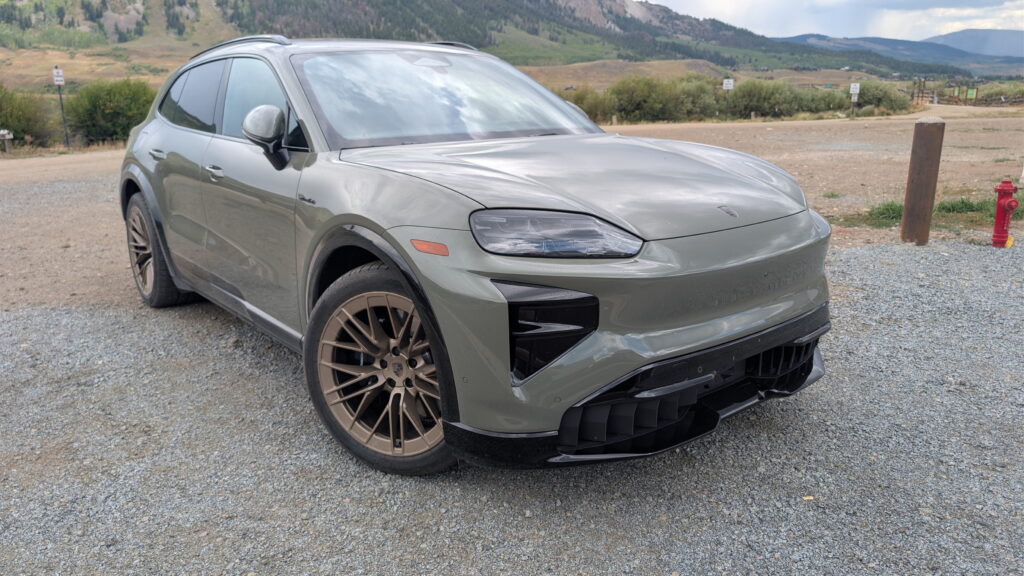
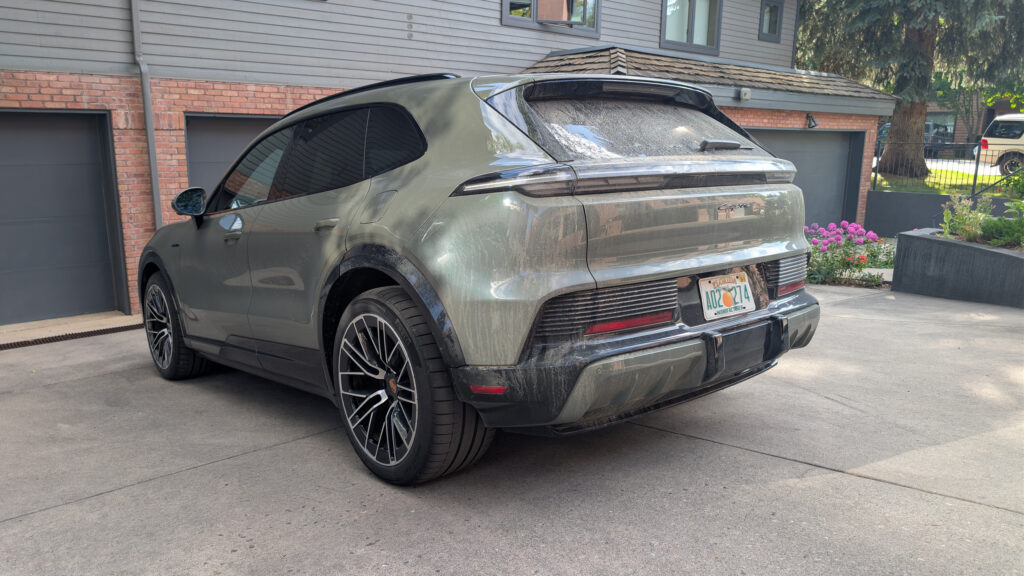
The overall look of the Cayenne Electric is stately. Not everyone will love the changes made in favor of identity and aerodynamics, but at least it doesn’t feel overstyled or too much like a jelly bean. Simple designs tend to age the best. That does not guarantee the Cayenne Electric will become a classic, but it has a much better shot than many.
The headlights are the one element I am still not fully sold on. They are technically impressive and help emphasize the Cayenne’s width, but they do not have quite the same immediate warmth as the best Porsche lighting signatures. Everything else works. On the Turbo, the active aerodynamic blades at the rear even extend at speed to clean up airflow. You will never see them work from the driver’s seat, of course, but they are genuinely cool.
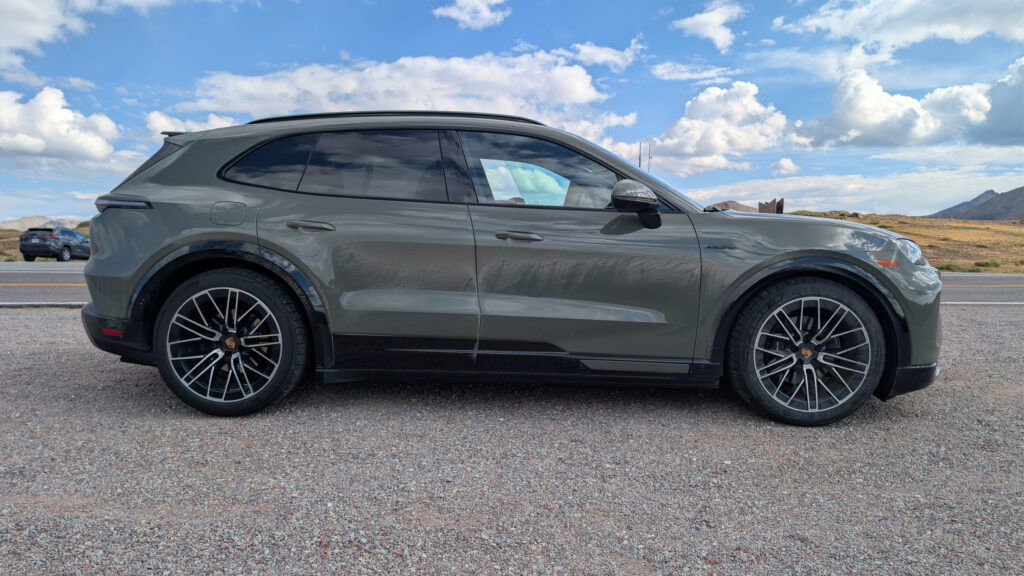
The reference vehicle here wears Monteverde Metallic over a brown Espresso leather cabin with black accents. It also gets rear-axle steering, Porsche Active Ride, the SportDesign package, 22-inch SportTechno wheels, performance summer tires, HD-Matrix headlights, a panoramic roof, and the Premium Package. The $163,000 starting point climbs to $198,180 quickly. That is Porsche ownership in a single sentence.
A Familiar Porsche Cabin, Just With More Glass
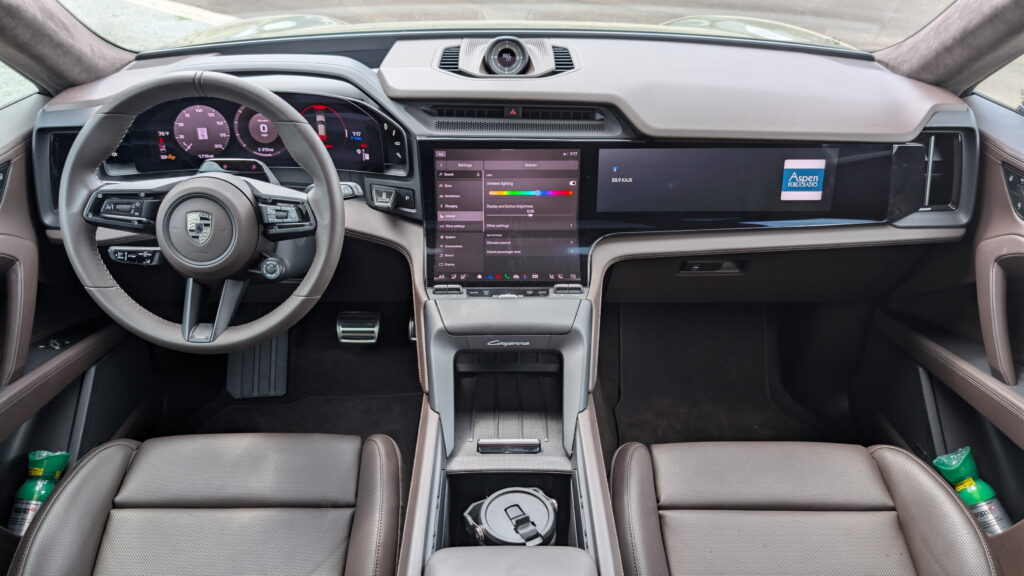
There are plenty of nods to the original Cayenne inside. The high center tunnel is still there. The steering wheel is recognizably Porsche. The seating position remains appropriately sporty for a Porsche, not just an SUV. It’s capable of settling in quite low, and that’s a big win. The chairs could plausibly come from one of Porsche’s sports cars, excluding the most hardcore GT models. They are supportive, comfortable, and genuinely attractive. The dashboard itself is a different deal entirely.
The centerpiece is Porsche’s curved Flow Display, which stretches down from the center stack toward the physical climate controls. It looks theatrical but is actually very functional in practice. The wrist rest below it enables genuinely easy use as the controls typically sit on the lower portion of the screen while the upper level shows the occupants what they’re managing. Many automakers expect drivers to operate giant touchscreens with one hand floating in mid-air. The wrist rest fixes that issue.
Some buyers will absolutely decide there is too much screen here. They will not be wrong. In 10 years, this cabin could look dated in the same way early digital dashboards eventually do. Or it could develop the occasional electrical gremlin that turns its futuristic charm into a very expensive service appointment.
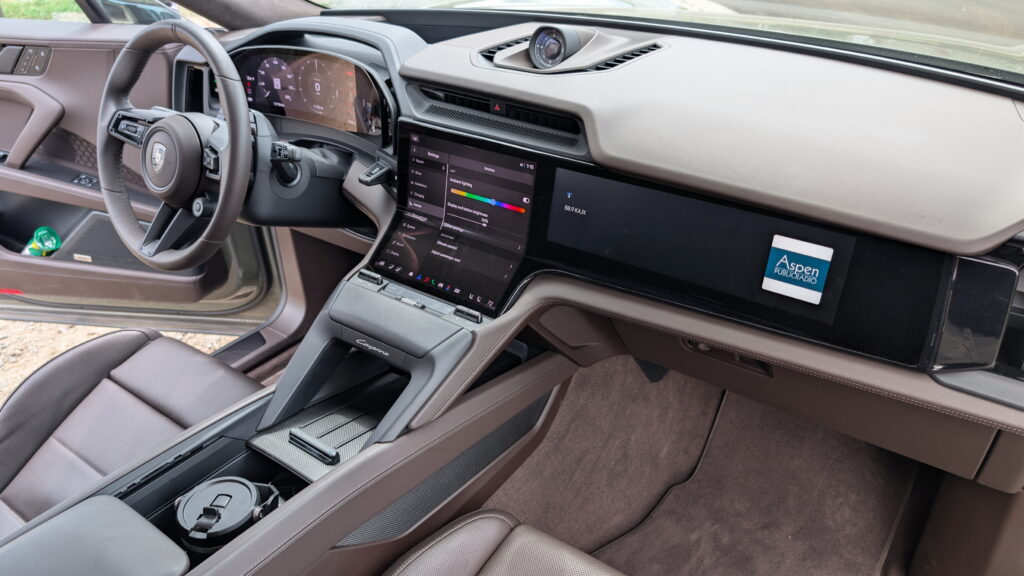
Right now, though, it feels appropriately over the top. The optional passenger display is one of the more feature-rich units in the business, and it reacts quickly enough that it does not feel like a tablet trapped in a dashboard. Users can connect bluetooth headphones, watch YouTube, and other things while their phone charges on the wireless dock in the console.
Porsche also put the physical volume control in the middle of the climate controls, where the passenger can reach it without leaning across the cabin. More automakers need to figure this out. There is no reason the passenger should need to reach toward the driver’s side for a knob when the driver already has audio controls on the steering wheel.
Credit: Stephen Rivers for Carscoops
The seats, upholstery, and major touchpoints feel appropriately expensive. The physical switchgear works well and provides a really nice tactile sensation during use. Some of it feels a little underwhelming, perhaps with its flat black color, but it should age well. The rear seats aren’t what I’d call spacious, but at six-foot-six, I still fit back there without feeling cramped. The seats themselves also offer quite a bit more lateral bolstering than just about everything else on the market. More performance-slanted SUVs should take note.
Finally, the cargo space is genuinely useful. The Turbo model offers 26.4 cubic feet of space, while the Base and S versions offer 27.6 cubic feet. The Coupe models see a significant drop-off to 18.9 for Base and S and just 17.7 for the Turbo.
Range And Charging
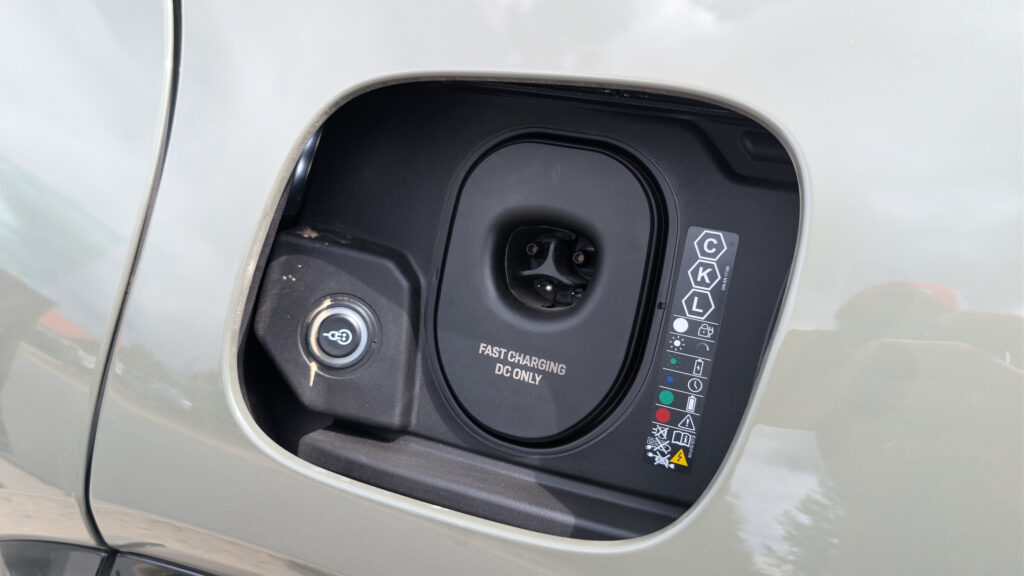
The Cayenne Turbo Electric is EPA-rated for 298 miles of range, or 303 miles with its range-oriented tire. That is fine. Not great, not embarrassing, just fine. The base Cayenne does better at 317 miles, while the Cayenne S is rated at 299 miles. Those are respectable numbers, but the Lucid Gravity makes the Porsche’s range look merely ordinary with up to 450 miles in Grand Touring form.
Where Porsche fights back is charging. Its 800-volt architecture can accept up to 400 kW under ideal conditions, allowing a 10-80 percent charge in as little as 16 minutes. That requires the right charger and the right battery conditions, obviously, but the capability matters. The Cayenne is built for drivers who will use it hard and cover long distances, not just people who want a fast commute appliance.
Driving Impressions: A Serious Testing Space
Speaking of driving hard over long distances. Of all the places to test an EV, several mountain passes in the Colorado Rocky Mountains aren’t what most would consider ideal. After all, range is heavily affected by the environment, and climbing can diminish it quickly. Despite that, Porsche brought us out to Aspen, Colorado, to test these cars and then sent us on a 234-mile trek through Crested Butte and Buena Vista as well as over Independence and Cottonwood Pass.
Driving the Turbo variant, with up to 1,139 hp (850 kW) when using launch control, the most immediate sensation is just how comfortable, quiet, and composed the car feels. Thanks to the active suspension, the Cayenne Turbo is almost always adjusting to suit the moment. By that, I mean that it has features that attempt, and almost always succeed, in countering any forces that a lesser SUV would feel under normal driving actions.
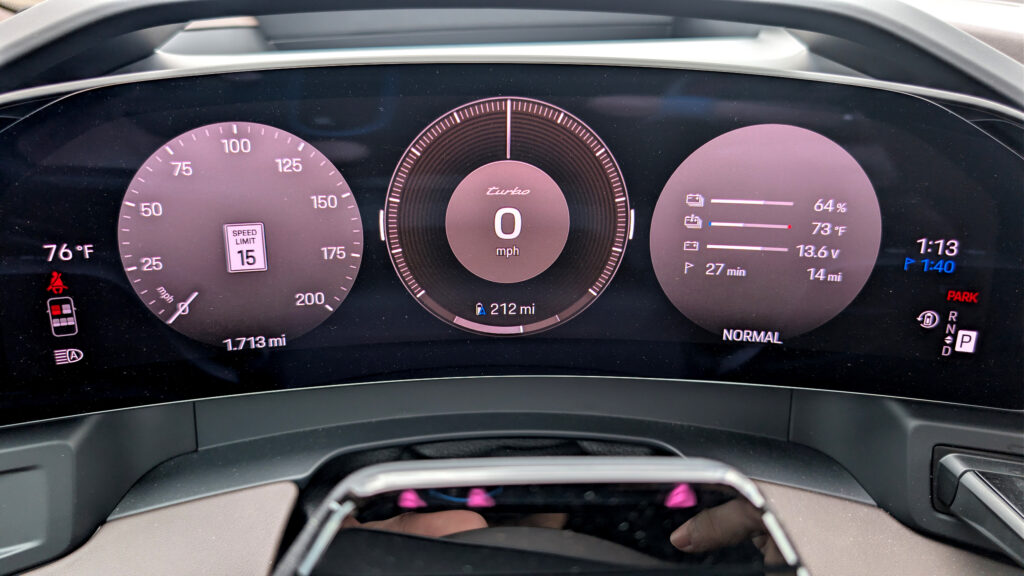
Under medium acceleration, the rear suspension actually lifts up very gently while the front lowers to keep the body level and cancel out the nose lift that is typical in just about every other vehicle, period. On braking, the opposite happens as the nose lifts rather than dips. In turns, the outer suspension lifts and the inner lowers.
This is what Porsche called “helicoptering,” and while it sounds like a party trick, it basically eliminates the sometimes jarring feeling that an EV can create with its instant torque and regen. It also never makes the car feel disconnected, numb, or artificial, which could be the most impressive bit of that technology.
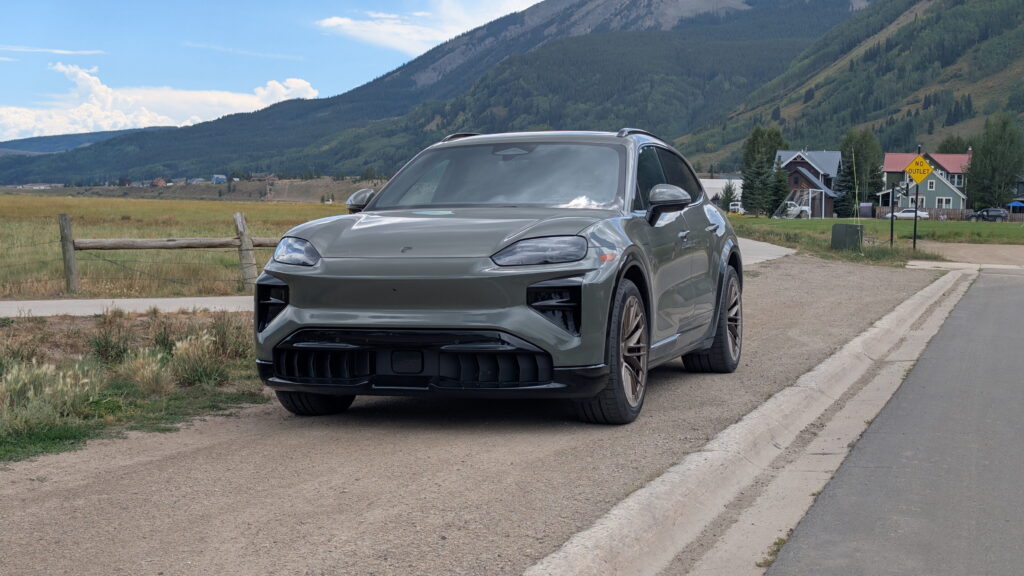
Then, there’s the real party trick in this SUV: its ability to go from stately five-passenger luxury cruiser to an absolute maniac. Spin the dial into Sport Plus, come to a stop, mash the brake, then the accelerator, let go of the brake, and it’ll do 0-60 in the real world in 2.4 seconds. Importantly, Porsche claims that figure, but we tested it on a real road literally less than a minute after driving on gravel, and it delivered a 2.5-second 0-60 time that registered as 2.3 when subtracting rollout.
Porsche tells us it managed its run on a prepared surface. Car And Driver recently managed 2.1 seconds, also on a prepared surface. We intentionally tested on a real road and are happy to tell you that this car will basically do its published number whether you’re at the track or not. Still, those numbers alone really cannot express properly just how insane that type of acceleration feels.
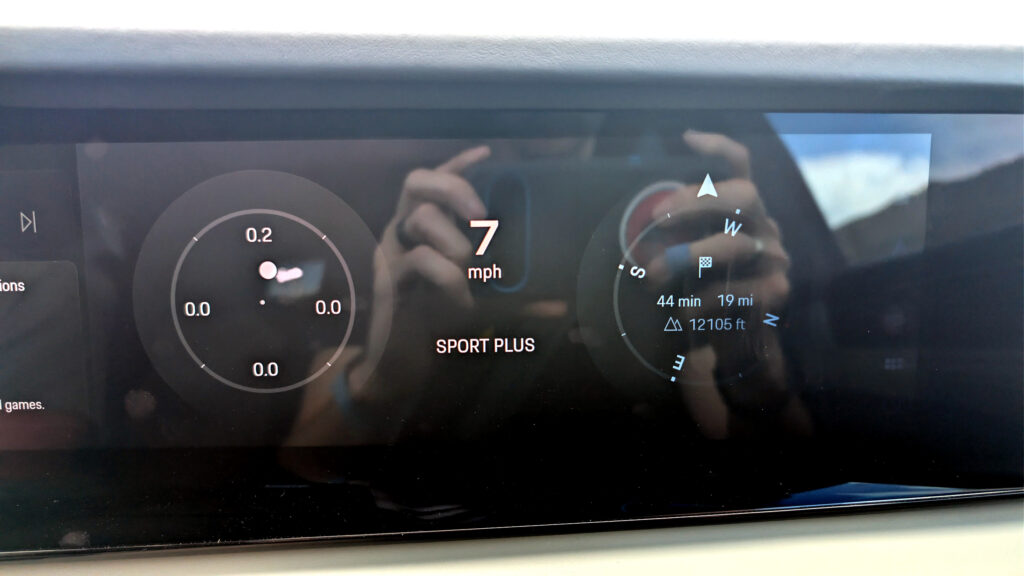
The Cayenne needed under 116 feet to go from not moving to highway speed. The feeling from the driver’s seat is akin to being shot out of a cannon at your local Six Flags. Perhaps the most impressive bit, though, is that it requires basically zero skill to pull this off. Hold the wheel straight, and the clever differentials and motors will ensure the car does the job. Don’t get me wrong. A car that requires the driver to have genuine skill to pilot it at the very edge is far more enjoyable and engaging, but if you want a car that helps someone with less skill to catch the bug for improving their own ability, this is a serious gateway drug.
The fun doesn’t stop when the straight lines run out, though. When not using launch control, the car moves around with a constant 844 hp (630 kW) on tap. The roads we drove were about as curvy and elevation-varied as they get. The Cayenne never ever felt overly heavy despite a curb weight similar to some full-size pickup trucks. In fact, the car feels much smaller than its wheelbase would suggest.
Then, there’s the braking situation. Porsche doesn’t offer one-foot driving. That singular statement is somewhat intentional. The brand wants to encourage engagement and the way this car brakes demonstrates that. Often, the transition from regen to friction braking can be jittery or jarring. In the Cayenne, it’s indistinguishable. That level of granular control feels like it’s a part of everything this SUV does. Rear-wheel steering makes the SUV feel more nimble both on mountain roads and in town when a slightly tighter turning radius can make a gigantic difference.
The Base Cayenne with 435 hp (325 kW) doesn’t come with all the same party tricks. It lacks the active suspension, the active aero, and rear-axle steering. Still, it feels properly composed and quick. In one section with a Turbo version both ahead and behind us, it didn’t feel overpowered or incapable of managing serious pace with its more powerful siblings.
One more note. Porsche will sell the Cayenne with an off-road package and while we didn’t truly test it off-road, we did take it on several dedicated gravel roads where it continued to feel composed and confidence-inspiring. For those who want or need it, the SUV can tow 7,716 pounds (3,500 kg).
Competition
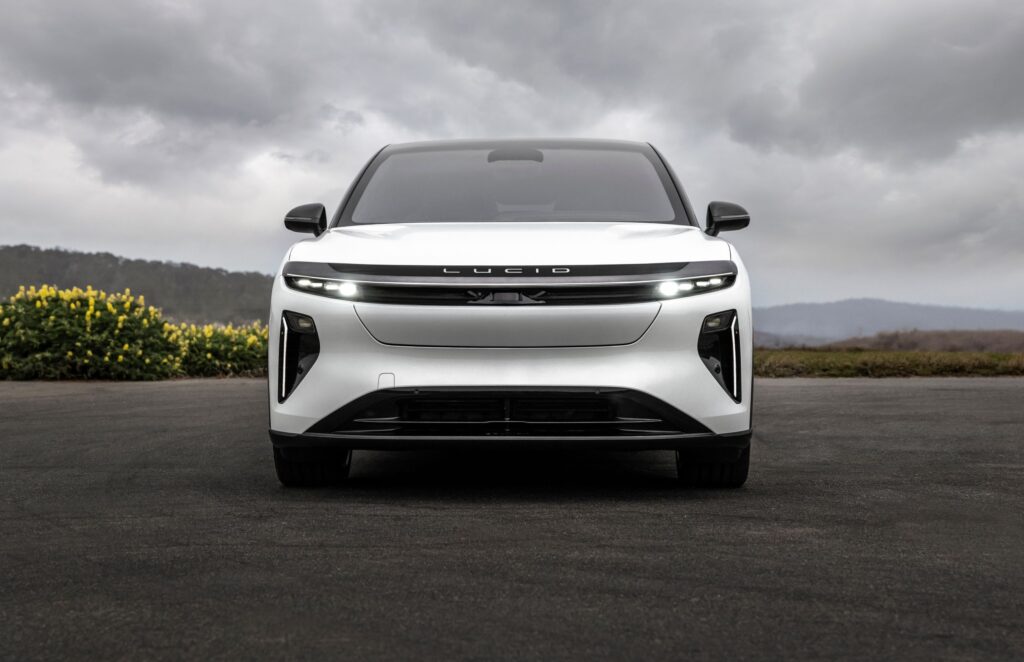
The Lucid Gravity is the Cayenne Electric’s biggest problem. It starts at $79,900 in Touring form, while the 828-hp Grand Touring starts at $98,900 and promises as much as 450 miles of range. Even the new 1,070-hp GT-S starts at $125,900, hits 60 mph in 3.1 seconds, and offers room for up to seven people along with a claimed 120 cubic feet of cargo space.
The Lucid cannot match the Cayenne Turbo’s 2.4-second sprint, nor does it have the same decades-long performance pedigree. But it makes a far more convincing case as the one EV in a well-off family’s garage that can genuinely do everything. It is quicker than almost anything needs to be, dramatically roomier, and better suited to long trips. Porsche has the badge, the chassis, and the more compelling driving experience. Lucid has the more rational argument.
Cadillac’s Vistiq makes a different kind of case. It starts at $77,395, offers three rows, up to 305 miles of range, 615 hp, a 3.7-second sprint to 60 mph, and standard Super Cruise. It is nowhere near as athletic or outrageous as the Cayenne Turbo, but it does much of the luxury-EV job for a lot less money. The Volvo EX90 takes an even calmer route. It is a safety-first, three-row family hauler with up to 305 miles of range and, in Twin Motor Performance form, 670 hp. Neither will tempt someone looking for a Porsche sports car in SUV form, but both make a strong argument for spending less.
Before BMW pulled it from America earlier this year, the iX was the closest traditional German alternative, particularly in M70 guise. The replacement is the new iX5, though Americans have to wait twice over, once for its Stateside launch next year, and again for the hotter M Performance and full-fat M versions, since the launch car tops out at 570 hp in iX5 60 AWD form. Mercedes’ EQS SUV leans harder into quietness and comfort. Both are good luxury EVs. None of these, though, feels as if they was engineered by people who spent their lunch breaks figuring out how to make a 5,860-pound SUV behave on a mountain road.
Verdict: A Porsche First, An EV Second
The Cayenne Turbo Electric does not make physics disappear. It is still enormously heavy, very expensive, and only fine when it comes to range. Its cabin also leans heavily into screens at a time when some buyers are already suffering from digital fatigue. And as impressive as the whole thing is, Porsche cannot ignore the ugly depreciation story surrounding some of its other EVs.
But it absolutely feels like a Porsche.
That might sound like faint praise in a vehicle with 1,139 hp, but it is not. Making an EV absurdly fast is easy compared with making one feel engaging, predictable, and genuinely enjoyable on a road that does not point straight ahead. The Cayenne manages that trick. It has the acceleration of a supercar, the composure of a luxury SUV, enough off-road ability to be more than a pavement princess, and the sort of granular brake and chassis control that makes driving it hard feel rewarding rather than intimidating.
No, it probably will not rewrite the rulebook in quite the same way the original Cayenne did. The electric-SUV market is too crowded, and too good, for that. But Porsche has built one of the first electric SUVs that feels like it has a legitimate reason to exist beyond its powertrain.
The harder question is whether buyers will pay $110,000 – $200,000 for it—and whether they will still want to own it once the newness wears off. That part isn’t up to Porsche’s engineers anymore, but regardless of what happens next, they should be proud of what they’ve created.