 by
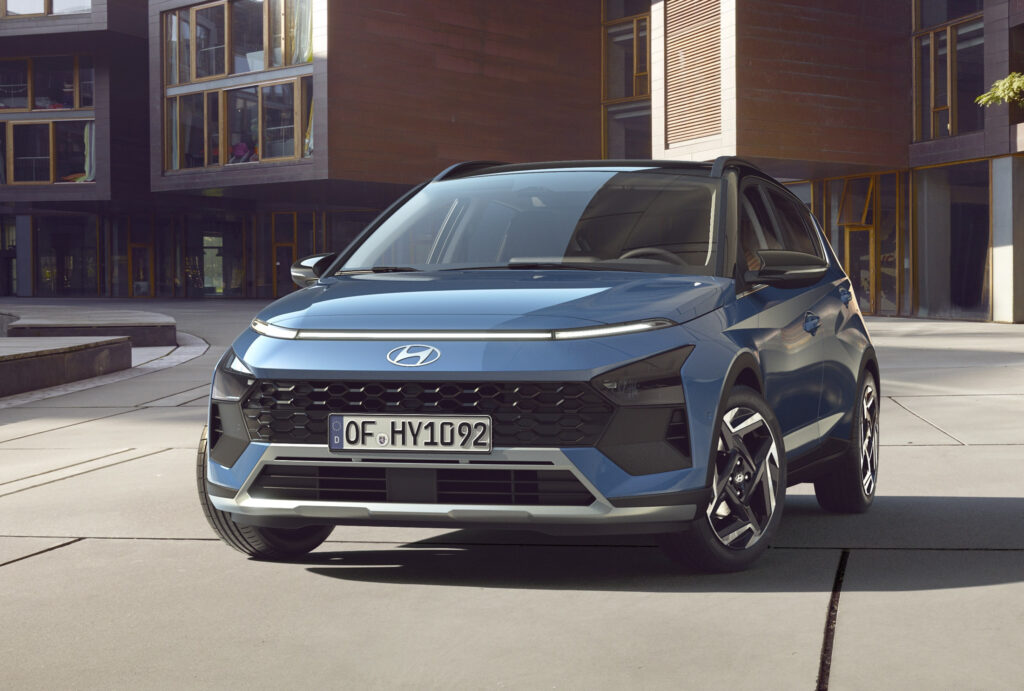
by If you’ve never heard of the Hyundai Bayon, blame geography. One of the Korean brand’s smallest crossovers is not sold in North America; it was created for the markets of Europe, India, and the Middle East, where compact dimensions and low operating costs are crucial.
The current model’s length is 4180 mm, which is 140 mm longer than the Venue that Hyundai already sells in the US. Thus, these two vehicles occupy almost the same niche, albeit serving different continents.
Launched in 2021 and recently updated in 2024, the Bayon sits below the Kona in Hyundai’s lineup. Its replacement has been spotted testing in recent months, meaning the current model is nearing the end of its life cycle. A boxier and more premium appearance might prepare it for launch in markets worldwide, so let’s look at everything known about it.
An angular nugget
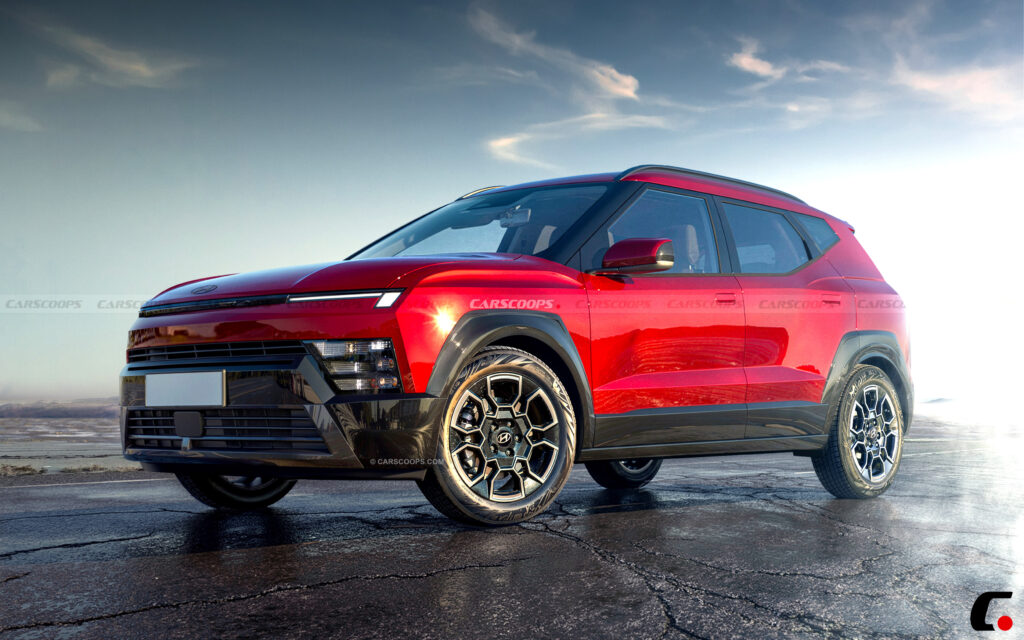
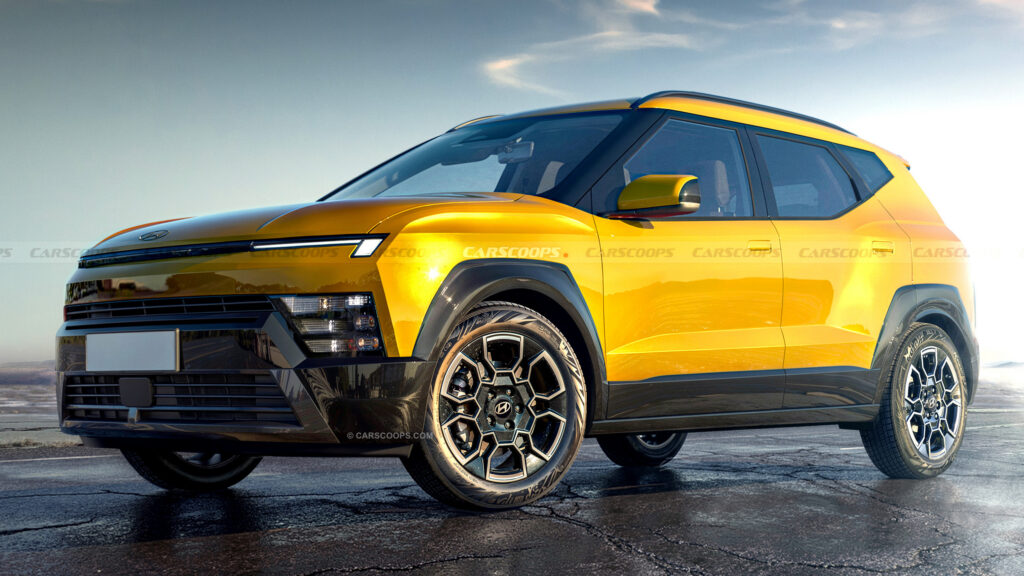
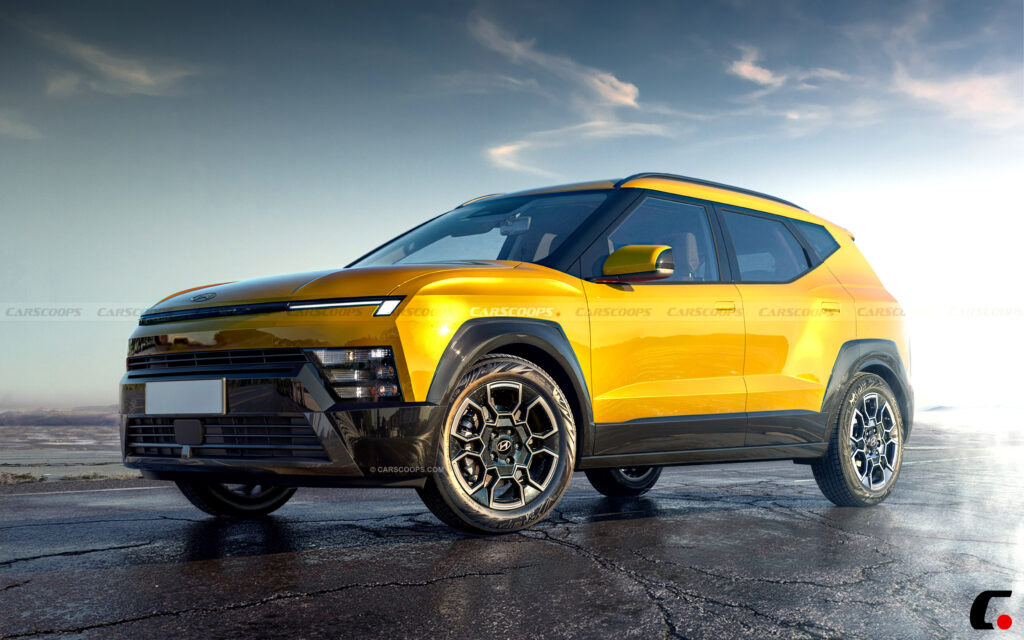
This author’s illustration depicts the next Bayon as a traditional CUV, rather than a lifted hatchback. The dimensions remain urban, but the overall shape has become more rectangular, angular, and vertical. A full-width LED light bar and vertically positioned headlights dominate the front, while an emphasis on horizontal lines helps create a sense of width.
The vehicle gets a vertical roofline with darkened A-pillars, a flatter roofline, and sculpted front and rear fenders with black wheel arch cladding. The rear lighting echoes the front: slim full-width LED strips framed by vertical elements at the corners. A more vertical tailgate is also anticipated, increasing cargo volume.
An intelligent interior
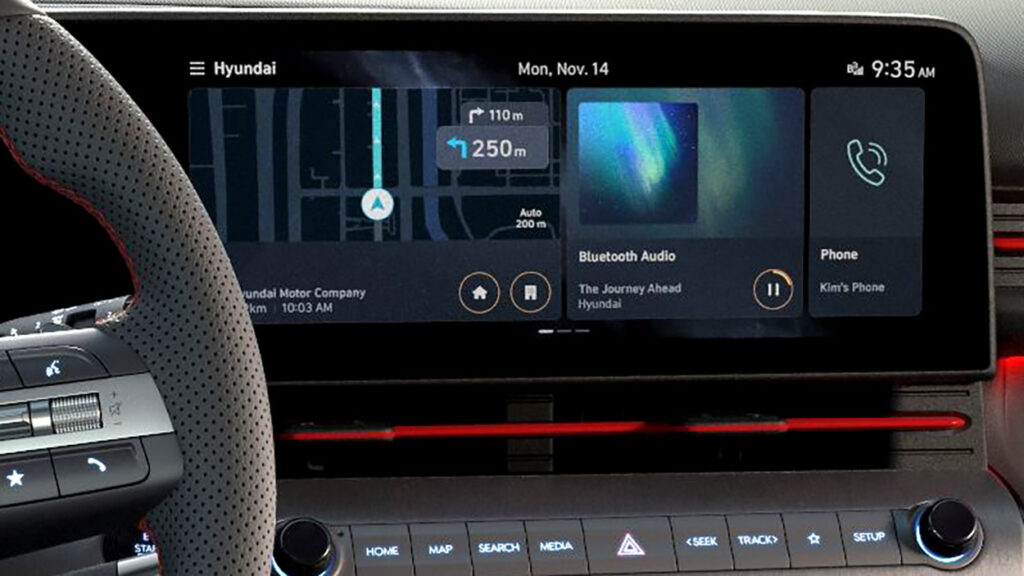
Inside, we expect a curved panoramic display with two 12.3-inch screens (with physical buttons) for the instrument cluster and infotainment system. It is unknown if it will run on the latest Pleos Connect architecture, but it will likely support wireless CarPlay and Android Auto, over-the-air updates, and other connected services.
Other anticipated options include a head-up display, higher-quality plastics, wireless smartphone charging, ambient lighting, a digital key, and a suite of Level 2 semi-autonomous driving assistants. Most interior dimensions will increase, especially headroom and legroom.
Construction basics
2027 Hyundai Bayon prototype (Photo by Baldauf).
Instead of a complete redesign, the Bayon will likely use an updated version of the K platform. Improved structural rigidity should help it achieve a higher rating than the current 4-star Euro NCAP score from 2021.
Don’t expect miracles regarding the chassis: McPherson struts will remain at the front, and a torsion beam at the rear. However, the car should be more refined and sharper to drive.
Electric assistance
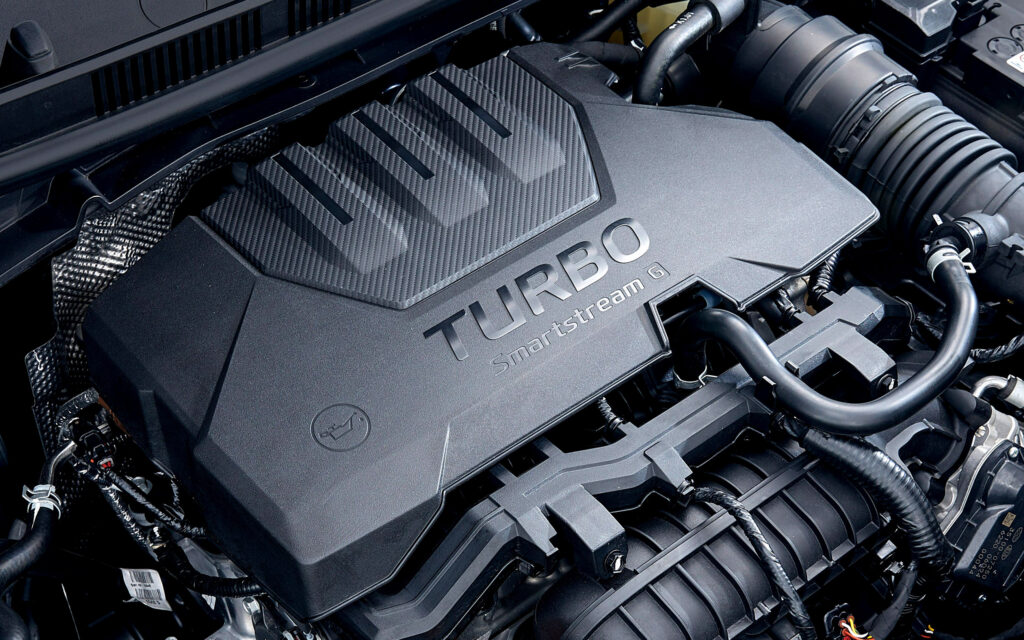
Currently, the Bayon uses a 1.0-liter turbocharged three-cylinder engine producing only 99 hp. A new 1.2-liter turbocharged four-cylinder engine, equipped with a 48-volt mild hybrid system, is reportedly set to debut to meet stricter European emissions standards.
Borrowing technology from older Hyundai models, a full hybrid is also planned. Rumors suggest this setup will produce around 140 hp in the N-Line version, transmitting power to the front wheels via a 7-speed automated manual transmission.
Competitors and unveiling

So, who will the Bayon compete with? Many rivals. The B-segment is one of the most competitive in Europe, and the Bayon finds itself right in the thick of it. Its closest competitor is its own Hyundai i20, complicating the hierarchy within the family even before the fight extends beyond the brand. Then the list is long: Suzuki Fronx, Toyota Yaris Cross, Renault Captur, Peugeot 2008, Skoda Kamiq, Opel Mokka, and Ford Puma, the latter of which has been a segment bestseller for years and sets the benchmark the Bayon must overcome.
The official unveiling is expected by the end of the year, with sales beginning in early 2027. Should the Bayon enter the US market? Share your thoughts in the comments below.
The updated Bayon appears to bet on a more traditional and solid design, moving away from the lifted hatchback image. This could help it better compete with bestsellers like the Ford Puma, especially considering the arrival of a 140-hp hybrid version that will significantly boost dynamics and efficiency. At the same time, retaining the K platform and torsion beam suggests Hyundai’s desire to keep the price at an acceptable level, which is critical for this segment. It will be interesting to see if the new Bayon can attract buyers outside of Europe, as its compact dimensions and hybrid technology could be in demand in developing markets where fuel is expensive and space is limited.