 by
by Interior of First Electric Ferrari Created by Jony Ive
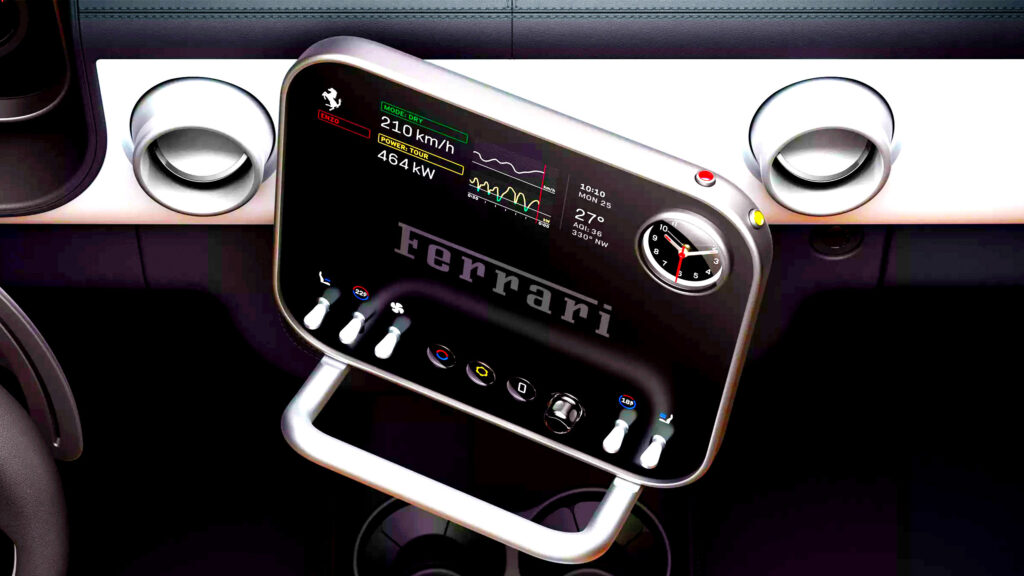
The first fully electric Ferrari sports car, the Luce model, will feature an interior that combines a retro mood with modern technology. A key role in its development was played by the renowned designer Jony Ive, who previously created iconic products for Apple, such as the iPhone and Apple Watch. Interestingly, despite his contribution to popularizing touchscreens, in cars he advocates for their limited use.
In the market, following Tesla’s influence, a trend towards large touchscreen displays replacing most physical buttons has become established. However, such a solution is often dictated not only by aesthetics but also by economics, as screens are cheaper than mechanical control elements. In the Ferrari Luce, Ive and his team from LoveFrom, led by Marc Newson, sought to find a balance.
Philosophy of Combining Digital and Physical
The goal was to create an interface that integrates digital displays with tactile, high-quality switches and toggles. Each physical element has a unique click and feel, and its development received attention akin to creating a watch or a camera. Jony Ive is critical of large touchscreens in cars.
“Practically and functionally, a large touchscreen in a car doesn’t work. It’s indisputable. I consider it a simple and lazy solution. This is a space where fascination with style and fashion can exist,” Ive noted in an interview with Top Gear.
Steering Wheel and Instrument Details
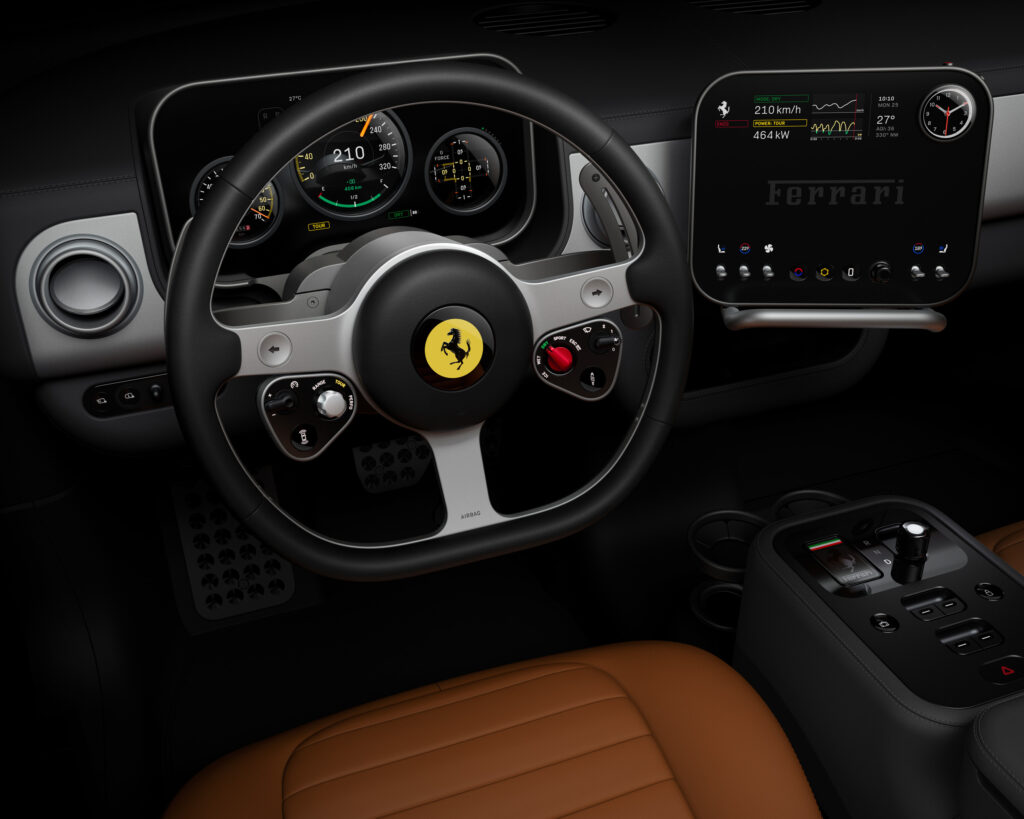
The Luce’s steering wheel is executed in a classic three-spoke design made of metal and consists of 19 parts manufactured on a CNC machine. It contains controls for the Manettino system, driving modes, windshield wipers, and turn signals. Behind the wheel is a digital instrument panel with round OLED displays from Samsung, protected by high-quality glass.
Each switch resembles a piece of jewelry, adding theatricality to an electric car that, due to the absence of a traditional engine, might lack part of the emotional charge inherent in other Ferraris.
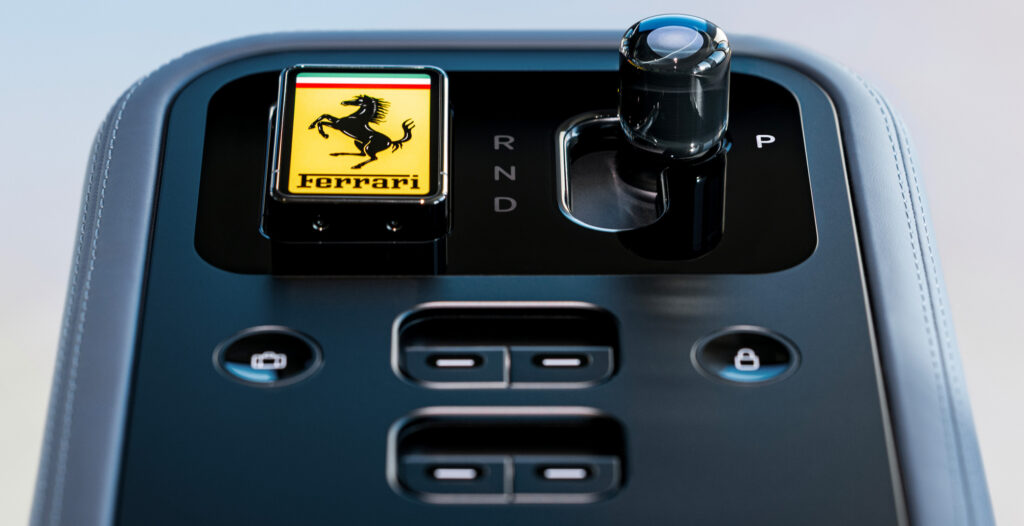
Jony Ive emphasized that creating something simple and intuitive is very difficult. The entire design is based on functionality, not on stylization or decorations that can be distracting and quickly become outdated. The instrument panel and steering wheel are closely linked because the car is, first and foremost, meant for driving. All control elements are physical and mechanical, enhancing the driver’s connection with the machine.
The approach demonstrated by Ferrari together with Jony Ive could become an important trend for the high-end segment, where the feeling of quality and direct control are often valued above minimalist aesthetics. It also raises questions about the future of interfaces in ordinary cars: will the industry return to more tactile solutions if supported by such authoritative figures. The work on the Luce shows that even in an era of total digitalization, there remains a place for craftsmanship and physical interaction, especially when it comes to products that evoke emotions.