 by
by New Ford electric pickup for $30,000 spotted during tests
The long-awaited affordable Ford electric pickup continues undergoing testing ahead of its debut next year. Our spy photographers have captured new images from Dearborn, where the compact pickup was parked next to a full-size SUV for a size comparison. The result clearly demonstrates just how small this vehicle is, especially against other Blue Oval offerings.
The camouflaged prototype was accompanied by a Ford Expedition Max, and this juxtaposition does not favor the pickup. The massive SUV, measuring 221.9 inches (5,636 mm) in length and 78 inches (1,981 mm) in height, makes the pickup look like a passenger car with a truck bed attached. The EV’s low roofline barely reaches the shoulder line of the Expedition. And there is a good reason for this.
Roofline dictated by calculations
Ford designers focused on aerodynamic efficiency, trying to squeeze out every kilometer of range so that the pickup could get by with a smaller and lighter battery. In a previous video, the company explained the math: adding 1 mm (0.04 inches) to the roofline height would cost $1.30 in additional battery expenses or reduce the range by 0.055 miles. That is precisely why the roofline is where it is.
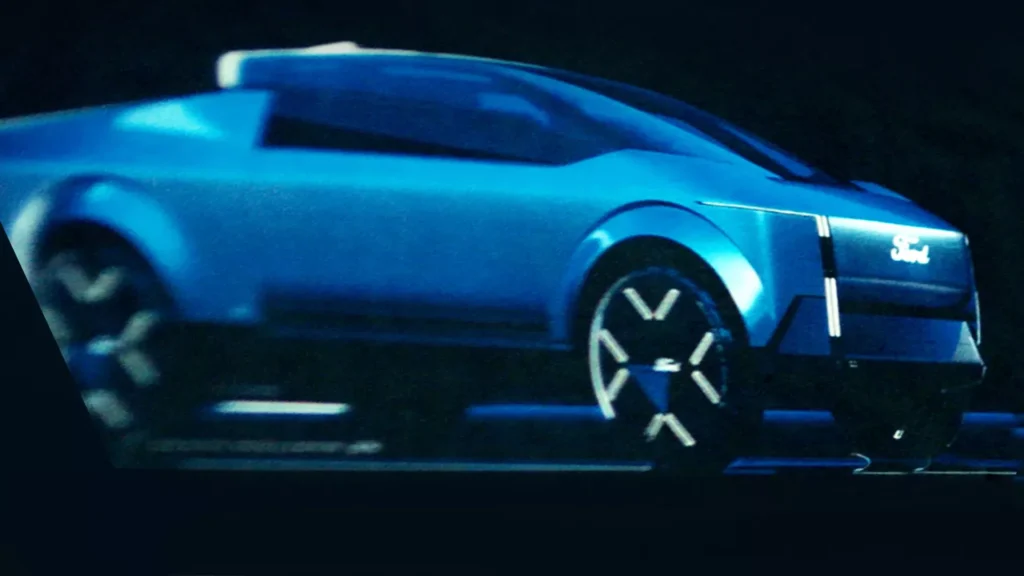
Besides the low roof, the model features a heavily raked windshield, smaller mirrors, Michelin E Primacy low rolling resistance tires, an integrated roof spoiler, and cross-shaped aerodynamic wheel covers measuring 19 inches. All of this, according to Ford, provides 15% better aerodynamics than any other pickup on the market today, including the similarly sized Maverick.
Retro elements under playful camouflage
Ford engineers applied patches of camouflage to the front end to conceal its shape. It is expected that the production version will have a lower and more rounded nose than what the prototype currently shows.
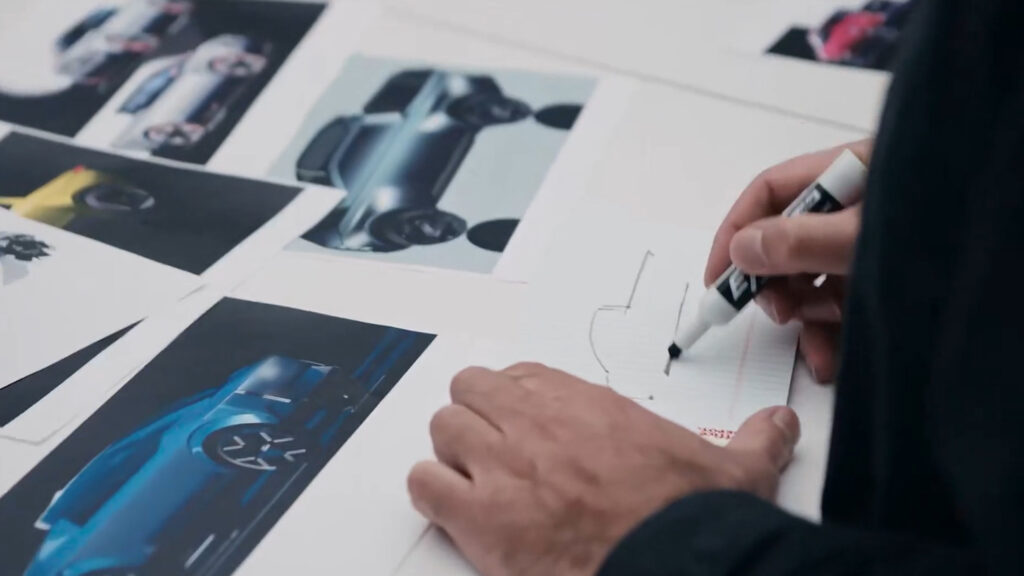
The low-mounted headlights are positioned so low that it suggests a possible revival of the design from the second-generation F-Series of the 1950s, a look Ford already used for the Mustang in the mid-2000s and early 2010s. However, these could be temporary elements, as earlier teaser sketches pointed to a more futuristic interpretation of the lighting signature.
The spy shots also offer a glimpse inside the cabin, where a large freestanding infotainment display dominates the dashboard. The new camouflage wrap also draws attention: it features images of a dog, a sailboat, a soccer ball, a heart, a flower, a motorcycle, and many other things.
Clean-sheet architecture
Under the hood, the pickup is based on Ford’s new universal EV platform, developed in-house by a dedicated skunkworks team. The architecture uses large aluminum universal castings, providing a 27% weight advantage over competitors, while also reducing the number of parts by 20%, fasteners by 25%, and production workstations by 40%. It also operates with a simplified 48-volt low-voltage system, with wiring length reduced by 4,000 feet (1,219 meters) and 10 kg (22 pounds) lighter than Ford’s first-generation EVs.
Ford has not yet revealed any details about the electric motors or battery pack. It is only known that the pickup will use a cost-effective lithium iron phosphate (LFP) battery, which will help keep the starting price around $30,000.
More details are expected in the coming months as the 2027 debut approaches. It was previously reported that the model could revive the historic Ranchero nameplate, although Ford has not officially confirmed this.
This pickup will become a key player in Ford’s strategy to democratize electric vehicles, offering an affordable price in a segment dominated by traditional gasoline models. Its compact size and emphasis on aerodynamics suggest that Ford is betting on urban and suburban buyers who need a practical vehicle with low operating costs, rather than a giant truck. The use of LFP batteries and a new platform with significant reductions in weight and production complexity will allow the company to achieve its target price, potentially challenging models like the Chevrolet Montana or even Ford’s own Maverick hybrid. Reviving the Ranchero name would add nostalgic charm, but even without it, the project looks like a bold step into the future of electric pickups.