 by
by Extreme Restomod: 1964 Ford Fairlane Heads to Auction
Some restomods are fairly simple, limited to minor mechanical upgrades, a fresh coat of paint, and an updated interior. However, this Ford Fairlane is as crazy as it gets and has very little in common with its original appearance.
Engine and Transmission
This Fairlane, set to cross the auction block in September, is built for a single purpose: covering a quarter-mile at maximum speed. It is based on a custom chassis from Fincher Fab and is equipped with a massive 572-cubic-inch (9.0-liter) Boss 9 V8 engine from Jon Kaase Racing. There are no exact power figures for this Fairlane, but such engines produce up to 848 hp and 1,038 Nm of torque.
Mecum Auctions
This engine is connected to a Hughes Performance automatic transmission, which sends power to the rear wheels via a Ford 9-inch rear axle. At the back, 20-inch wheels are fitted with massive tires to provide maximum traction on the drag strip.
Chassis and Brakes
The list of equipment doesn’t end there. A custom four-link suspension keeps the rear end in place, a coated 3-inch exhaust system expels gases, adjustable Koni shocks are fitted at all four corners, and Wilwood four-piston calipers clamp down on 13-inch discs.
Body and Interior
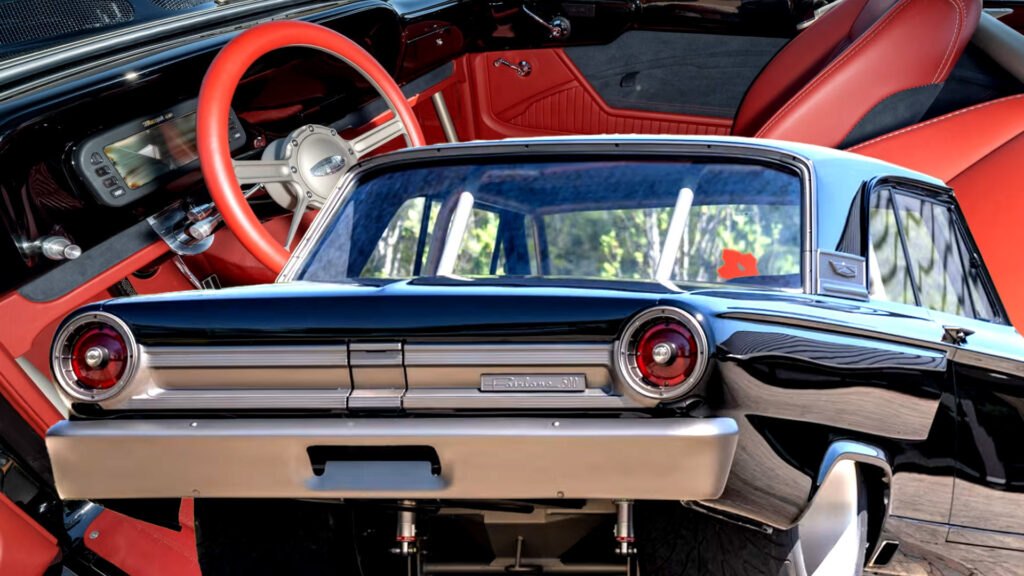
The Ford’s body has also undergone significant changes. The massive engine necessitated a pronounced hood scoop, and the car also features modern satin silver bumpers and new front and rear lights.
Mecum Auctions
As for the interior, a full roll cage has been added. New seats, upholstered in red leather that extends onto the door panel bases and along the transmission tunnel, are also installed. The original gauges have been replaced by a simple digital display.
If a drag-racing-prepped Fairlane sounds like what you need, check the list for all the juicy details.
Mecum Auctions
This car is a striking example of how restomods can transform classic models into true performance monsters, completely changing their essence. Instead of a typical restoration, engineers created a machine ready for modern competition while retaining only the external resemblance to the original. This approach highlights that even after decades, classic cars can gain new life adapted to the most extreme demands.