 by
by The choice of a plug-in hybrid three-row SUV in Australia is quite limited. Among the few options are the Mazda CX-80, Chery Tiggo 9, and the new BYD Sealion 8. In this small group, the Kia Sorento PHEV often becomes the first choice for buyers thanks to its recognizable brand, which matters greatly in this segment.
Kia has been producing the fourth-generation Sorento since mid-2020, using the same N3 platform as the Hyundai Santa Fe. However, while the related fourth-generation Santa Fe made way for the fifth generation a few years ago, an all-new Sorento will not appear until 2027 at the earliest, or even later.
Review: Kia Sorento X-Pro — What Most Buyers Need
Compared to the Santa Fe, the current Sorento looks somewhat outdated, although it received a facelift in 2024. The advantage of the Kia crossover is the availability of a plug-in hybrid powertrain, while the only electrified version of the current Santa Fe is a conventional hybrid without the ability to charge. Does this make the Kia Sorento PHEV a smart purchase? Let’s find out.
Quick Facts
Model: 2026 Kia Sorento GT-Line PHEV
Starting Price: AU$84,600 (US$60,600) including on-road costs
Dimensions: 4815 x 1900 x 1700 mm
Wheelbase: 2815 mm
Curb Weight: 2117 kg
Powertrain: 1.6-liter turbocharged four-cylinder engine / single electric motor
Power: 262 hp (195 kW) / 350 Nm
0-100 km/h: ~8.7 seconds
Transmission: Six-speed automatic
Fuel Consumption: 6.4 L/100 km per test results
On Sale: Now
Photos: Brad Anderson/Carscoops
In Australia, Kia offers no less than 12 different variants of the Sorento. Prices start at AU$58,340 (US$41,800) for the base S Diesel DCT. There are three other diesel models, the most expensive of which costs AU$73,940 (US$53,000), and eight hybrid models, with prices ranging from AU$59,490 (US$42,600) to AU$84,600 (US$60,600) for the GT-Line PHEV AWD, which we tested for a week.
In the US, there are also numerous Sorento options. Buyers have access to eight versions with conventional internal combustion engines and three hybrid versions, including the PHEV, which starts at US$48,290.
The Sorento PHEV’s powertrain consists of a 1.6-liter turbocharged four-cylinder engine working in conjunction with an electric motor integrated into the six-speed automatic transmission. A 14 kWh lithium-ion polymer battery is also installed. Total output is 195 kW (262 hp) and 350 Nm of torque. For comparison, the slightly simpler Santa Fe Hybrid has 172 kW (231 hp) and 367 Nm.
Luxurious and Solid Interior
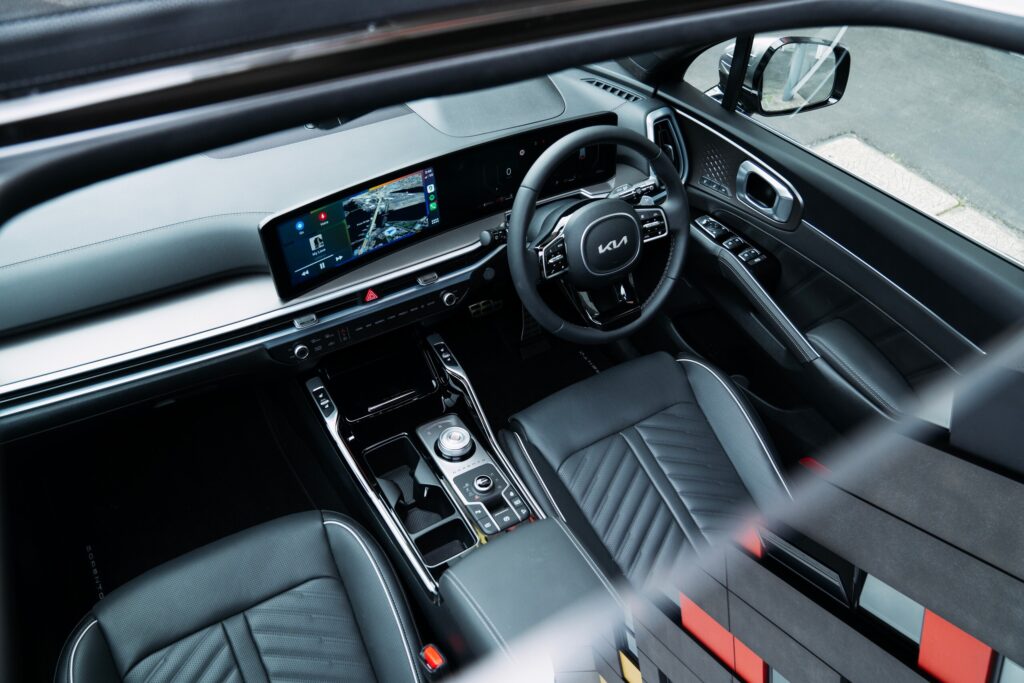
We have always liked the interior of this generation Sorento, and we still like it, despite only minor changes having been made since its introduction.
During the update, Kia abandoned separate displays for the instrument cluster and infotainment system in favor of two screens housed under a single curved glass panel. Such screens are used in many Kia models and are excellent, providing clear graphics and understandable menus. Wireless Apple CarPlay and Android Auto are also standard.
Kia also made the climate control controls more elegant, moving them slightly lower on the dashboard and replacing physical buttons and switches with a narrow touchscreen. While I still prefer actual buttons, this is a much better solution than placing all climate controls in the central touchscreen.
From the driver’s seat, the Sorento retains the familiar feeling of heft that has been characteristic of it since the current generation arrived. It has thick, massive interior door handles and grab handles, and in the GT-Line trim, plenty of soft-touch surfaces.
The test car’s interior was trimmed in soft black Nappa leather, with heated and ventilated front seats. Other nice features include a wireless smartphone charging pad, ample storage space, and a large panoramic glass roof. While overall build quality and materials are good, the Sorento’s interior doesn’t feel as luxurious as the latest Santa Fe’s.
Read Also: Kia Removes Navigation from 2026 Sorento S but Raises the Price
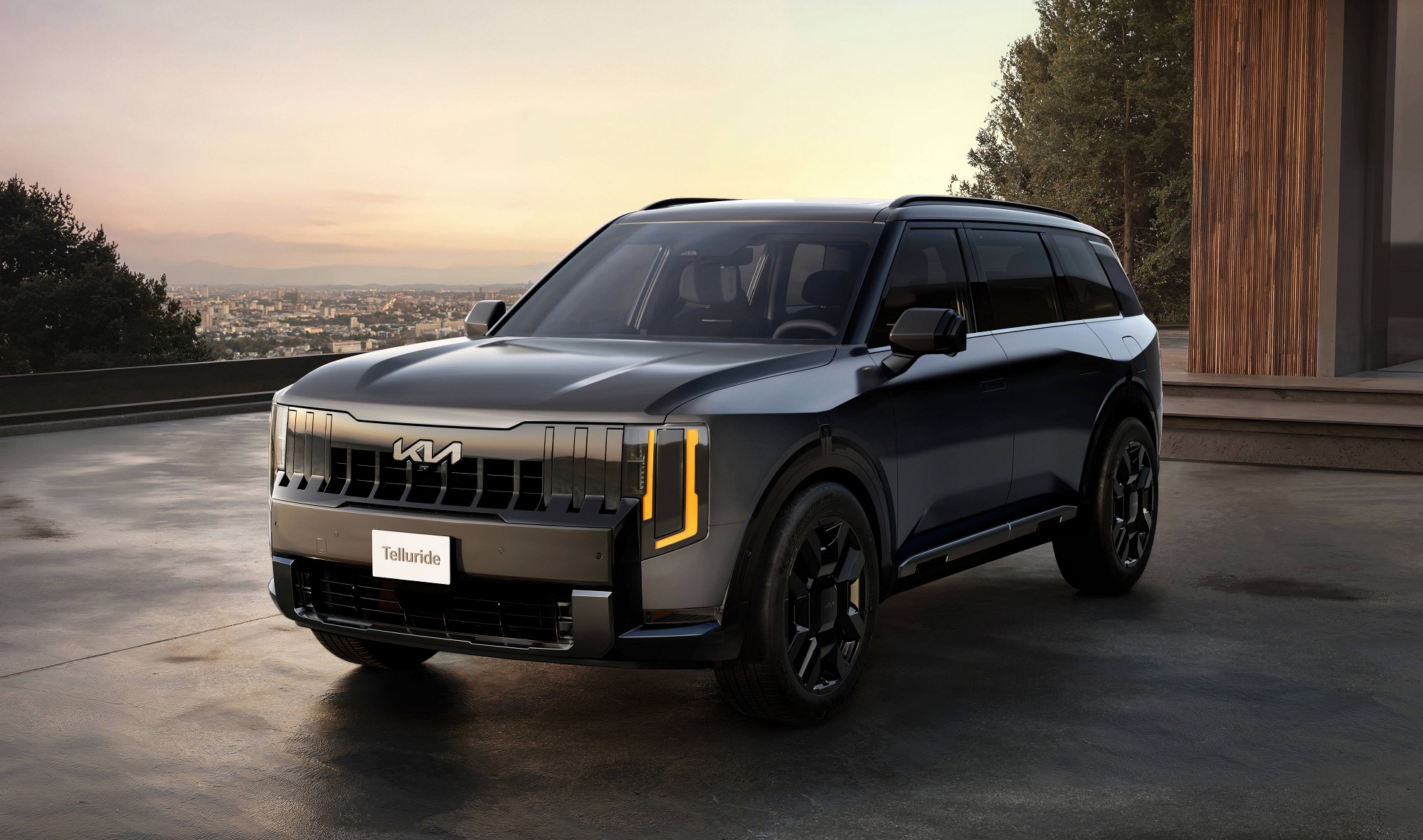
It is also worth noting that while the Sorento offers three rows of seats, the third row is only suitable for children, or perhaps teenagers. It is more compact than in other Kia models, such as the larger EV9 and Telluride. If you have a family of more than four, these options, as well as the Kia Carnival, would be a better choice.
As Good as Ever, But What About the PHEV?
A week behind the wheel of the Sorento PHEV showed it to be a solid vehicle, although the powertrain leaves something to be desired.
For example, in the Hyundai Santa Fe, which also uses a compact 1.6-liter turbocharged four-cylinder engine, the engine remains quiet in all driving modes and even surprisingly unobtrusive when pressing the accelerator pedal. In the Sorento PHEV, things are a bit different.
For some reason, the engine in the Kia is quite loud and clattery, almost mistakable for a diesel. The harsh sound is most noticeable during hard acceleration, but it is also quite noisy even during city driving. This is a real pity because it reduces the overall refinement of the vehicle.
What About Electric Driving?
Obviously, the advantage of choosing a plug-in hybrid Sorento is the ability to drive solely on electric power. The SUV is equipped with a 14 kWh battery pack, and while it is certainly small, it is sufficient for a claimed all-electric range of 68 km. Achieving this figure proved difficult, but driving at least 50 km solely on electric power is entirely realistic.
With a fully charged battery, the overall fuel consumption is the claimed 1.6 L/100 km. However, as with other plug-in hybrids, this efficiency figure is only relevant if the vehicle runs exclusively on electric power for a significant portion of those 100 km. If the battery is depleted, this figure will obviously increase as the vehicle will rely on the internal combustion engine.
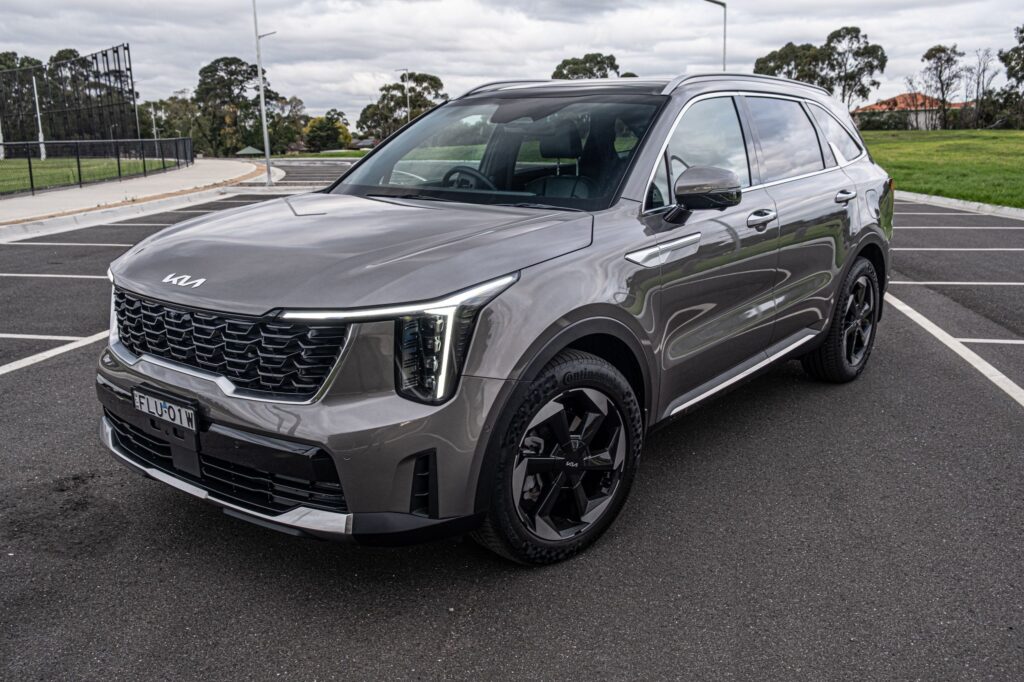
Over a week with the vehicle, I achieved an average consumption of 6.4 L/100 km, and this was with regenerative braking set to its maximum level for most of the time. However, I did not charge the battery, so the consumption figure is much higher than what Kia claims. Overall, it’s good efficiency, but the base all-wheel-drive diesel model has a claimed consumption of 6.0 L/100 km. Those interested in purchasing a Sorento PHEV need to be confident that they will actually charge it to get the maximum benefit. If not, it’s better to get the diesel.
While other Sorento versions use an eight-speed transmission, the Sorento PHEV is equipped with a more traditional six-speed automatic gearbox. Although it has two fewer gears, it works just as well as the eight-speed, providing smooth shifts, like in the Santa Fe. The shifts aren’t very quick, but that is hardly likely to be an issue for most buyers.
It is also worth noting that because the electric motor is integrated into the transmission, shifts can be somewhat noisy. It’s not a disaster, but potential buyers should be aware of this, so we recommend arranging a test drive if you plan to buy a Sorento PHEV, rather than making a blind order without getting behind the wheel.
The ride is good and meets most expectations for such a vehicle. Considering the Sorento PHEV weighs over 2000 kg, it feels a bit stiffer, but still does an excellent job absorbing bumps and road imperfections. Does it have as soft a ride as the Santa Fe? No.
Like the pre-facelift model, the updated Sorento retains the same Eco, Normal, and Sport driving modes, as well as Terrain modes with Snow, Mud, and Sand settings, selected via a dial on the center console. During the limited time spent driving off-road, the Sorento felt confident and surprisingly capable, intelligently managing traction and adjusting transmission behavior.
On the road, I drove mostly in Eco mode. Sport mode will likely be rarely used by buyers, but it does a decent job of making the SUV feel a bit livelier.
Verdict
The Kia Sorento remains a good choice for those seeking a three-row SUV, although it is best used as a two-row vehicle. The interior feels premium, and the overall build quality is excellent, as you’d expect from Kia.
However, the plug-in hybrid version is probably not the model to choose. If you can’t charge it every night, the PHEV is no more efficient than the standard turbodiesel and is less refined. Those who want to enjoy limited electric-only driving could also opt for the regular hybrid. Additionally, there is the current Santa Fe HEV, which generally seems like a better package than the Sorento. You’ll just have to forgive the Hyundai’s controversial design.
Thus, the Kia Sorento PHEV is a compromise vehicle that is best suited for those who have the ability to charge it regularly at home or at work. Otherwise, more traditional versions, especially the diesel, can offer better efficiency and overall driving satisfaction without needing to plug in. The market for three-row plug-in hybrids in Australia remains niche, and the Sorento PHEV holds a strong position in it thanks to brand recognition, but its technical shortcomings, particularly the noisy engine, might make buyers look at competitors or other versions of this same model.