 by
by Global Toyota Sales Continue to Decline: China Plunges Due to Gasoline Prices
Toyota remains the world’s largest automaker, but its position has been shaken. For the fourth consecutive month, the company’s sales have declined, mainly due to falling demand in Asia, including China, as well as in Oceania and the Middle East.
Overall Sales Picture
In May, Toyota sold 834,729 vehicles worldwide, which is 7.2% less than in May 2025 and lower than the figures for April (849,306 units) and March (897,871). Including its subsidiary Daihatsu, the global figure drops even further — by 7.4% to 885,207 units, while production decreased by 5.8% to 857,765.
Financial results are also worsening. Toyota forecasts an operating profit of 3 trillion yen ($18.8 billion) by March 2027, which is below estimates and last year’s 3.8 trillion yen ($23.4 billion).
North America and Europe Hold Steady
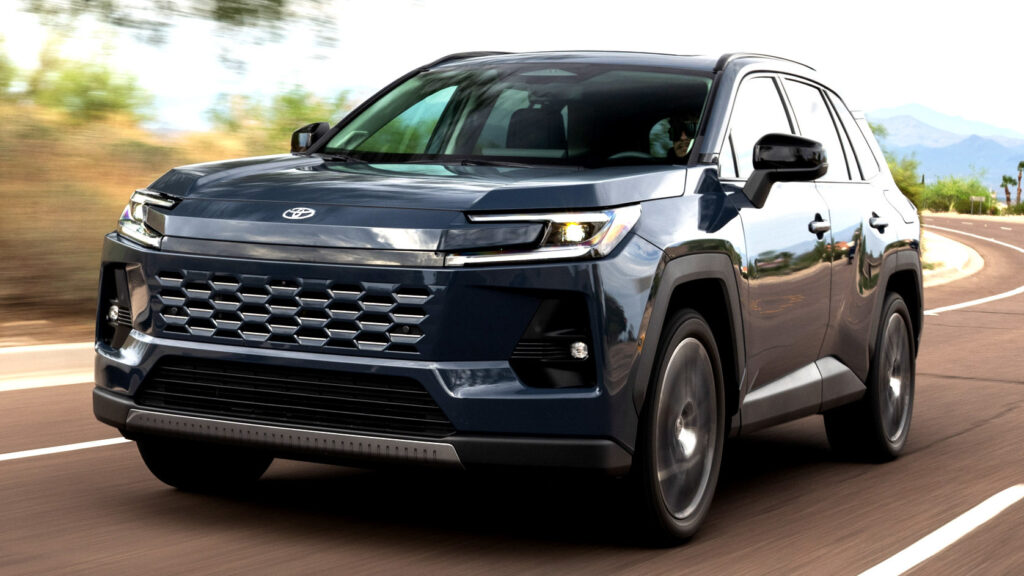
In North America, sales remained relatively stable, declining by only 0.1% year-over-year in May to 280,539 units, although this is an increase compared to the 261,979 vehicles sold in April. In the U.S., the situation is slightly worse: sales fell by 0.6% to 238,800 units for the month. Toyota partially attributes this to the transition to the new generation RAV4, despite growing demand for hybrids and electric vehicles.
In Europe, sales also remained almost unchanged, decreasing by 0.3% in May to 99,597 units.
China Drags Asia Down
In the Asian region, sales fell by 17.2% in May to 224,366 vehicles, with China being the main cause. Sales there collapsed by 31.7% year-over-year to 102,299 units. Toyota describes this as a “difficult market environment,” pointing to high gasoline prices in the country. The losses extend beyond a single month: over five months, the automaker sold 579,419 vehicles in China, which is 15% less than in the same period last year. Other countries in the region are also experiencing declines: the Philippines — down 13.4%, Malaysia — down 18.2%, Pakistan — down 24.7%.
Toyota’s global business is also affected by the situation in the Middle East, partly due to the war in Iran. Sales in the region dropped by 38.6% in May to 29,568 units. This region is more significant than the number of vehicles sold suggests. According to Bloomberg, Chief Financial Officer Takanori Azuma stated that Toyota ships between 500,000 and 600,000 vehicles to the Middle East annually and expects nearly half of them to be affected.
Oceania followed the same path: sales fell by 26% to 21,061 vehicles, although May surpassed the April figure of 19,651.
Japan Defies the Trends
Contrary to the general trend, strong demand is observed in Toyota’s domestic market in Japan. Sales in Japan increased by 11.1% in May compared to 118,381 vehicles a year earlier, making it one of the few major markets showing growth. However, the May figure is still significantly lower than the 149,924 new Toyotas sold in April.

Despite Toyota remaining the global leader, current trends point to serious challenges. The decline in sales in China, which the company attributes to high gasoline prices, may indicate structural changes in the market, where consumers are increasingly switching to electric vehicles. The war in Iran and instability in the Middle East add uncertainty. At the same time, stability in North America and Europe, as well as growth in Japan, show that the brand still has strong positions in key markets. The reduction in profit forecasts suggests that the company is preparing for a long period of adaptation to new market conditions, including increased competition from Chinese electric vehicle manufacturers and changing consumer preferences.