 by
by Impressive sales start for Toyota’s new electric sedan
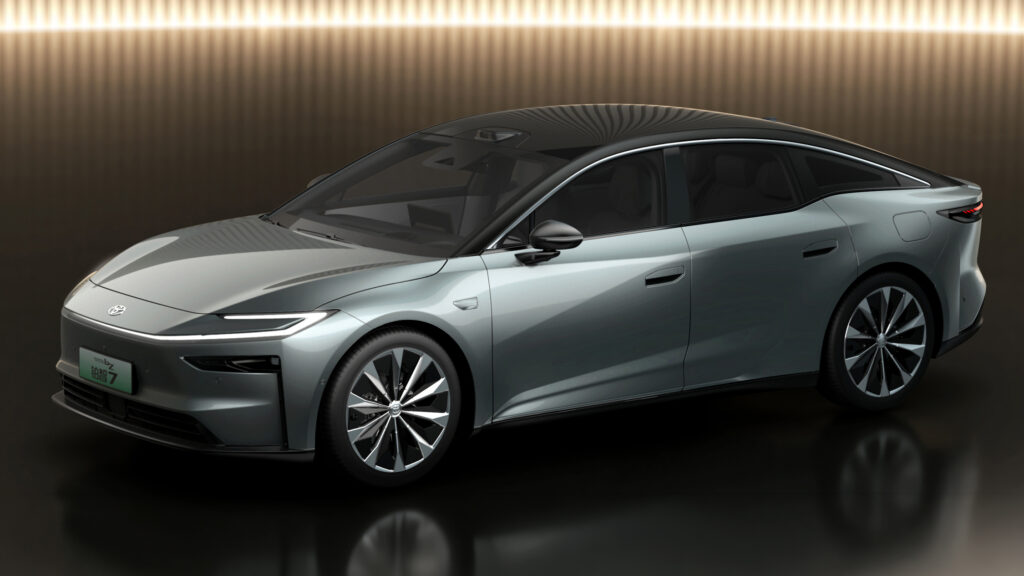
Toyota has received a real avalanche of orders for its new bZ7 electric sedan, which launched on the Chinese market. In just the first hour after sales began, the Japanese automaker received over 3,100 orders for this car. Such a frenzy around the new model is easily explained by looking at its price.
An affordable flagship for the Chinese market
The bZ7 model is Toyota’s new flagship electric vehicle, developed specifically for China in partnership with the local company GAC. It is a large sedan packed with modern technology but with a surprisingly accessible price. The car’s price starts from 147,800 yuan (approximately $21,500 USD) and goes up to 199,800 yuan (about $29,000) for top configurations.
This is a large and fully smart-technology-equipped car, but it is also ridiculously cheap.
Despite the highly competitive Chinese market, where buyers are offered many advantageous proposals, the bZ7 looks like an incredibly profitable purchase. With a length of 5130 mm and a wheelbase of 3020 mm, the car has dimensions similar to the Tesla Model S, but costs even less than the more compact Model 3, which starts from 236,500 yuan in China.
Power and range
The new flagship cannot compete in dynamics with the most powerful sports electric cars, but it offers enough for comfortable driving. The maximum engine power is 278 horsepower. The car is offered with two battery options: 71 kWh and 88 kWh. The declared range according to the Chinese CLTC cycle can reach up to 710 kilometers depending on the configuration. The manufacturer also claims that fast charging can restore up to 300 kilometers of range in just 10 minutes.
Technological interior equipment
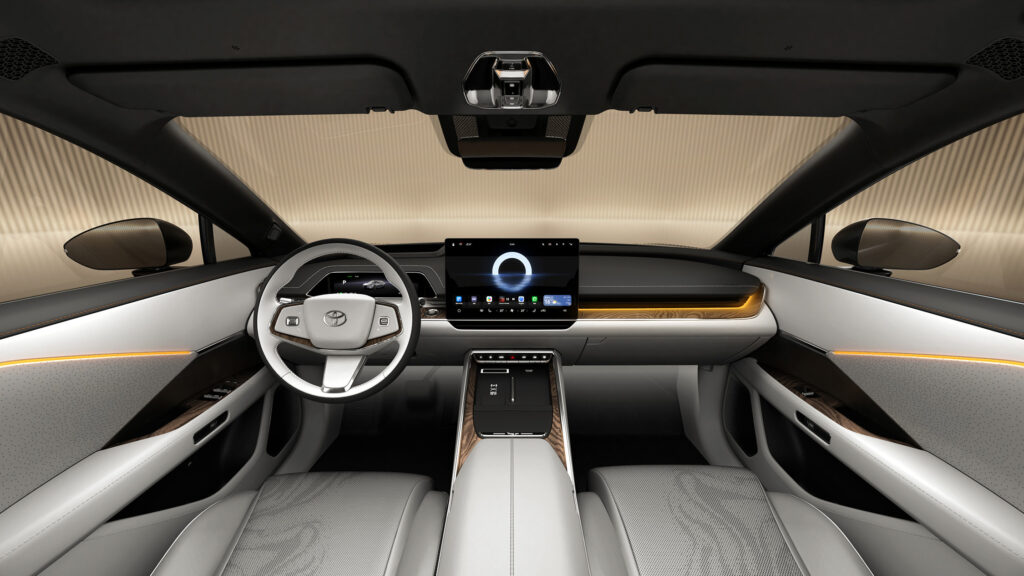
The car’s interior impresses with its level of comfort and integrated technologies. The front “zero-gravity” seats offer heating, ventilation, and massage functions. The central place on the dashboard is occupied by a floating 15.6-inch multimedia system screen.
The interior runs on Huawei’s HarmonyOS system and also has integration with the Xiaomi smart home ecosystem.
This allows the driver to interact with home devices directly from the car. An advanced driver assistance system is offered as an option, including a roof-mounted lidar, five millimeter-wave radars, 11 high-definition cameras, and 10 ultrasonic sensors. Altogether, this makes 27 sensors for enhanced safety.
The success of the Toyota bZ7 in the Chinese market clearly demonstrates how important the price-to-features ratio remains when choosing an electric vehicle. A car that matches premium models in size but competes in price with the compact class has obviously hit the mark. This situation also highlights the intensity of competition in China, where local manufacturers and joint ventures are constantly raising the bar, offering more and more technology for less money. The rapid sales start of the bZ7 may signal a change in Toyota’s strategy in the key global electric vehicle market, focusing on affordability and localization of technology to win over the mass consumer.