 by
by History and Origin of the Model
When Enzo Ferrari approved the creation of a cheaper production car named after his late son, the goal was never to devalue what the Ferrari badge stands for. Thus the Dino brand was born, assembled at Ferrari’s own factory, starting with the 206 GT model and continuing with the 246 GT and GTS.
Status and Auction Value
For decades, collectors treated cars under the Dino brand as a lesser line, inferior to anything bearing the prancing horse. One 246 GTS, currently up for auction in the US, proves the opposite, as the money being offered for it is usually reserved for the real models.
Watch: The Dino May Not Have Worn A Ferrari Badge, But It Still Made The Company Better
Technical Specifications and Modifications
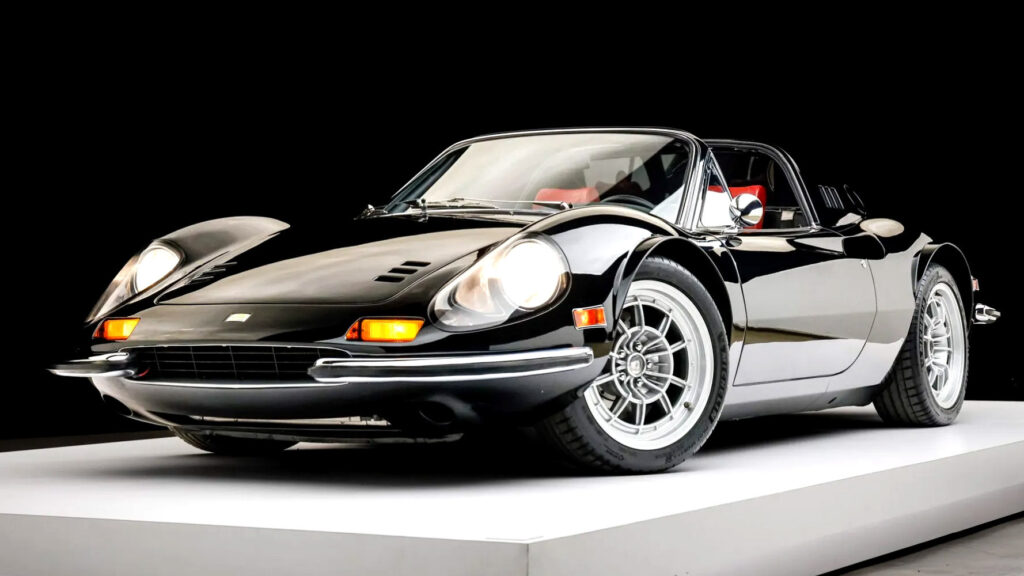
This particular Dino 246 GTS is a 1972 model that was restored and modified by British firm Moto Technique between 2017 and 2018. The car was originally sold with a 2.4-liter V6, but this example received an upgraded 3.6-liter naturally aspirated V8 Tipo 105C with individual throttle bodies, modified cylinder heads, and a custom MoTec engine management system.
Bring a Trailer
The engine is claimed to produce around 400 hp and is paired with a five-speed manual transmission that drives the rear wheels. In addition to the new engine, the Dino received an updated aluminum radiator, adjustable shock absorbers, and front and rear anti-roll bars.
Exterior and Interior
During the transformation, the car was stripped to bare metal and repainted in its current black color. It also includes new clear headlight covers, larger 17-inch wheels, and modern Michelin Pilot Sport 4S tires. Brakes from a Ferrari 360 Modena are also installed.
Bring a Trailer
The interior is also quite special thanks to new Daytona-style seats upholstered in red and black leather. Inside, there is also red carpeting, a gated shifter, and a modern audio system with iPod support. This Dino has covered approximately 8,500 miles (13,679 km) since the restoration, and interest in it is clearly high, as bids have already exceeded $800,000.
Whether a heavily modified Dino is worth such a sum is a fair question, as purists usually want originality with matching numbers, and this car has deliberately abandoned that. The bidders obviously do not care. They are paying for what it is now, not for what left Maranello in 1972. If you want this Dino in your garage, the full listing is on Bring a Trailer.
This case demonstrates a shift in priorities on the collector car market: sometimes bold modifications and modern performance can outweigh historical authenticity. Although traditionalists may criticize the loss of the original V6 engine, buyers see a unique car with a powerful V8 that offers a completely different driving experience. It also highlights that the Dino brand, once considered the “little brother,” is now able to attract the attention of serious collectors, especially in such an unusual configuration.