 by
by CATL’s New Battery Sets Absolute Charging Speed Record
Battery manufacturer CATL has made a significant leap forward in the field of fast charging, surpassing competitors BYD and Geely. Its new lithium-iron-phosphate (LFP) Shenxing battery demonstrates impressive performance.
Key characteristics of the new battery:
The Fleeting Nature of Records in the EV World
Some records, as in sports, stand for decades. However, in the world of electric vehicle technology, they are updated at an incredible pace. The recent BYD record of charging the Blade 2.0 battery from 10% to 70% in 5 minutes has already been surpassed twice in a short time.
First, Geely introduced its Golden Brick battery, which reaches 70% charge in 4 minutes and 22 seconds. And now CATL has made that result seem like slow charging from a regular household outlet.
CATL’s 3rd-gen Shenxing LFP battery stops the clock at 3 minutes 44 seconds. And that’s not even charging to 70 percent, but to 80 percent.
Advantages of Non-Linear Speed and Cold Resistance
One of the key advantages of the new CATL battery is its ability to instantly reach peak charging speed, starting from the first seconds. This contrasts with the typical behavior of many batteries, where speed slows down as they fill up.
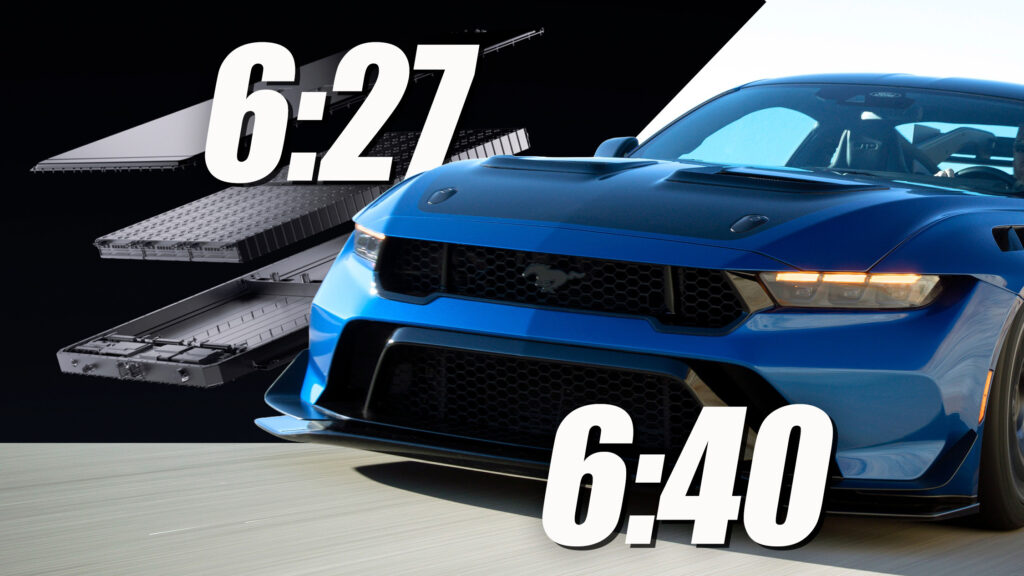
A full cycle from 10% to 98% takes only 6 minutes and 27 seconds. For comparison, the Geely Golden Brick battery requires 8 minutes and 42 seconds to charge to 97%, and the BYD Blade 2.0 – about 9 minutes. An interesting fact: the full charging time of the CATL battery is 13 seconds shorter than the time it takes for the Ford Mustang GTD to complete a lap of the Nürburgring.
Cold weather? No problem
All record figures were achieved under ideal temperature conditions. However, CATL claims that even in extreme cold of -30°C, charging from 10% to 98% takes only 9 minutes, which is an exceptional result.
Technological Secrets and Longevity
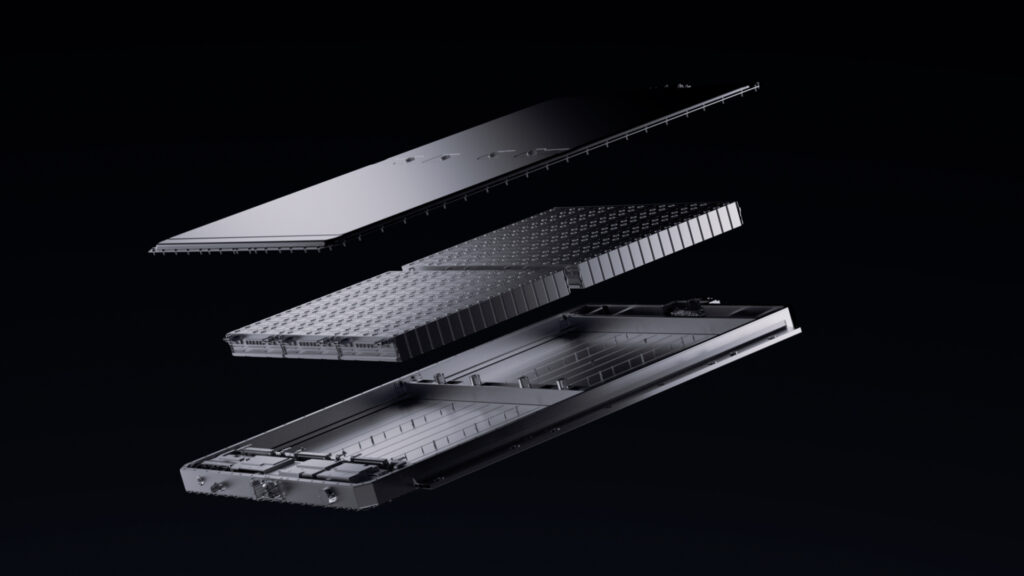
Presenting the new battery at the Tech Day Event, CATL revealed some technical details. The battery’s internal resistance is only 0.25 milliohms, which is 50% lower than the industry average. The battery is also equipped with a temperature monitoring system in each cell and a self-heating technology that uses thermal pulses to improve charging at low temperatures.
No less important is the statement about longevity. CATL claims that the battery’s State of Health (SoH) remains above 90% even after 1000 cycles of ultra-fast charging. This is a kind of response to the skepticism of some engineers, for example from BMW, regarding the viability of the new generation of ultra-fast Chinese batteries.
The Future of the Technology Beyond China
BYD has already begun expanding its Flash Charging fast-charging network in Europe. CATL also states that it is exploring opportunities to export its technologies beyond China in partnership with SAIC-GM-Wuling. However, a quick appearance of these batteries in the US market should not be expected.
This technological breakthrough does not just set a new bar for competitors; it effectively changes the perception of electric vehicle practicality by significantly reducing charging “downtime.” Such speed makes the recharging process more akin to traditional refueling, which could become one of the key factors for a mass transition to electric transport. CATL’s success also underscores the intensity of the technological race in China, which is becoming a primary driver of innovation in battery technology worldwide. The question now is not only about the availability of powerful charging stations, but also about how quickly automakers will be able to integrate such batteries into their models while maintaining safety and reliability.